Thursday, 09:44
December 4, 2025
Hi again,
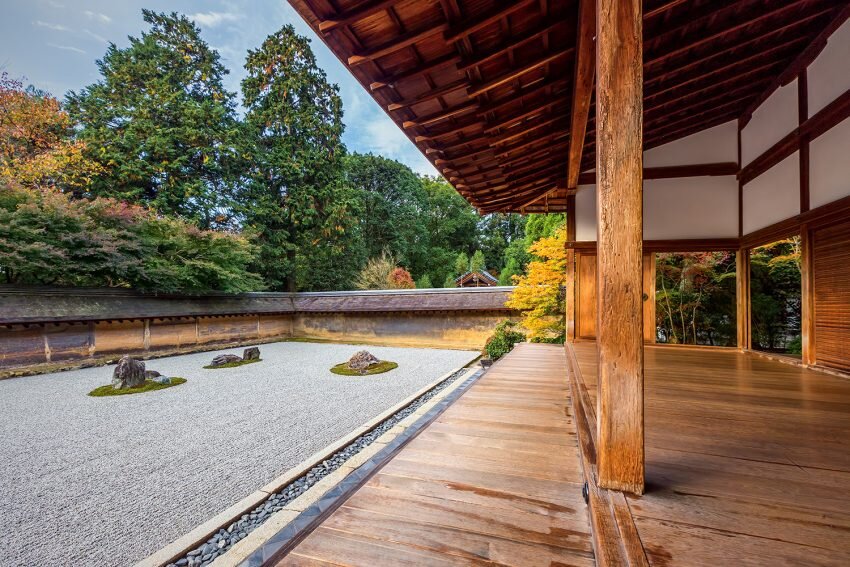
today I’m writing to you from a different study, with white walls and light wood furniture.
The lights above me are white.
I miss the window I usually look out of while writing.
It’s not an aesthetic detail: it’s the topic I want to talk to you about today.
I’ll use two new words, but they are simple.
I will call perceptual ecology everything your body perceives over time: sight, sound, smell, temperature, materials.
Within this, today we look at only one slice: visual ecology.
We can define it as:
“Visual ecology is what your eyes consume every day: the landscape of walls, trees, parking lots, hills, screens.”
To orient you, here’s where we’re going today:
- why daily sight is not neutral (living nature vs. walls and parking lots);
- what body budget is and how the brain reads the visual landscape;
- how buildings can behave as a landscape, not just as boxes;
- why all this is a form of silent public health, not simple decor;
- what you can do in your small way to improve your visual ecology.
The fundamental question is just one:
what do your eyes consume every day, and how different is this diet from that of others?
I promised to delve into the pillars of biophilia, and we are doing so: through the lens of visual ecology, today we are talking about the first pattern, Visual Connection with Nature.
It is the first pattern of the first pillar: Nature in Space.
(If you haven’t read the introductory article, you can find it by clicking here).
1. The fundamental problem: a poor visual diet
A wall, a parking lot, or something else
«Biophilia is the innate tendency to focus on life and lifelike processes.»
— Edward O. Wilson
Perhaps your day begins like this:
You work in administration for a company, so you drive to the industrial zone.
You sit at your desk.
You turn on the computer.
You look up and out the window you see:
an asphalt parking lot with cars, a neglected flowerbed, the warehouse opposite, and the road with trucks moving around the area.
Nothing dramatic happens.
Nothing explodes.
You just start working.
By mid-morning, you already feel drained.
You take a break, open Instagram, scroll through some photos of the sea, mountains, sunsets: for five minutes you feel better.
Then the screen turns off, you return to the previous view, and you start getting distracted again.
You’re tired, you can’t concentrate.
In the evening, you try to compensate with meditation apps, yoga... and in the end, you blame yourself because “you should be better at managing stress.”
Does this sound familiar?
(It does to me. And not just to me, I fear.)
It’s not bad luck.
It’s not “that’s just how I am.”
It’s that your nervous system is working without help, in an environment that gives it nothing back.
(It’s a bit like being on a diet and living in a pastry shop open 24/7.)
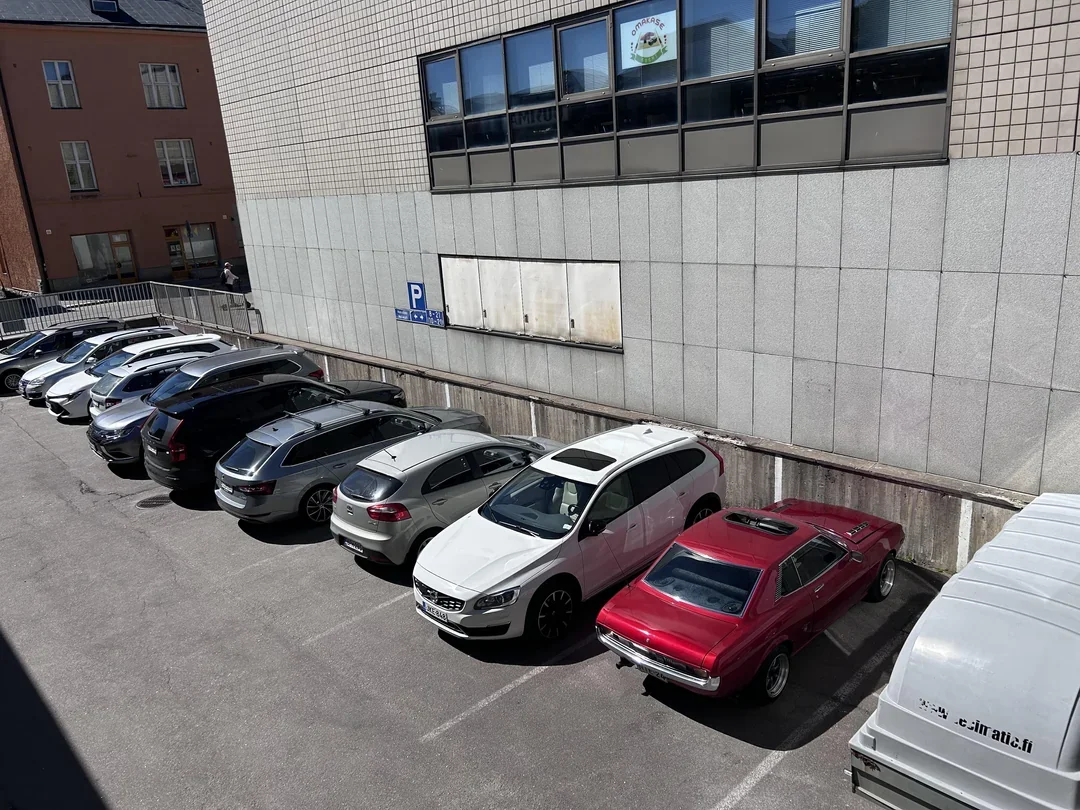
Office with a view of a parking lot.
All of this – buildings, parking lots, facades, trees, hills – for me is one thing: visual ecology.
It’s not a neutral background: it’s an ecosystem that either nourishes you or drains you.
And here enters an uncomfortable point.
Visual contact with nature – the possibility of looking out and seeing living green, trees, water, life – is currently not considered relevant.
Some people work with a view of hills, parks, green courtyards.
And some people work with a view of asphalt, billboards, and blind facades.
It’s not the same thing.
It’s not just that “the tree-lined avenue in the nice neighborhood is prettier.”
We’re talking about different levels of baseline chronic stress.
The implicit question is:
“Is it possible that looking out the window matters so much?”
Blunt answer... Yes.
(A bit like Gregor Samsa in Kafka’s Metamorphosis who spends half the story looking for air and meaning by looking out the window.)
Today we know quite well what happens to the body and brain when you look at a piece of nature.
Spoiler: it’s not your character’s fault. It’s the view’s fault.
If you don’t solve this, you can change meditation apps every month: your body will continue to work in visual ecology deficit.
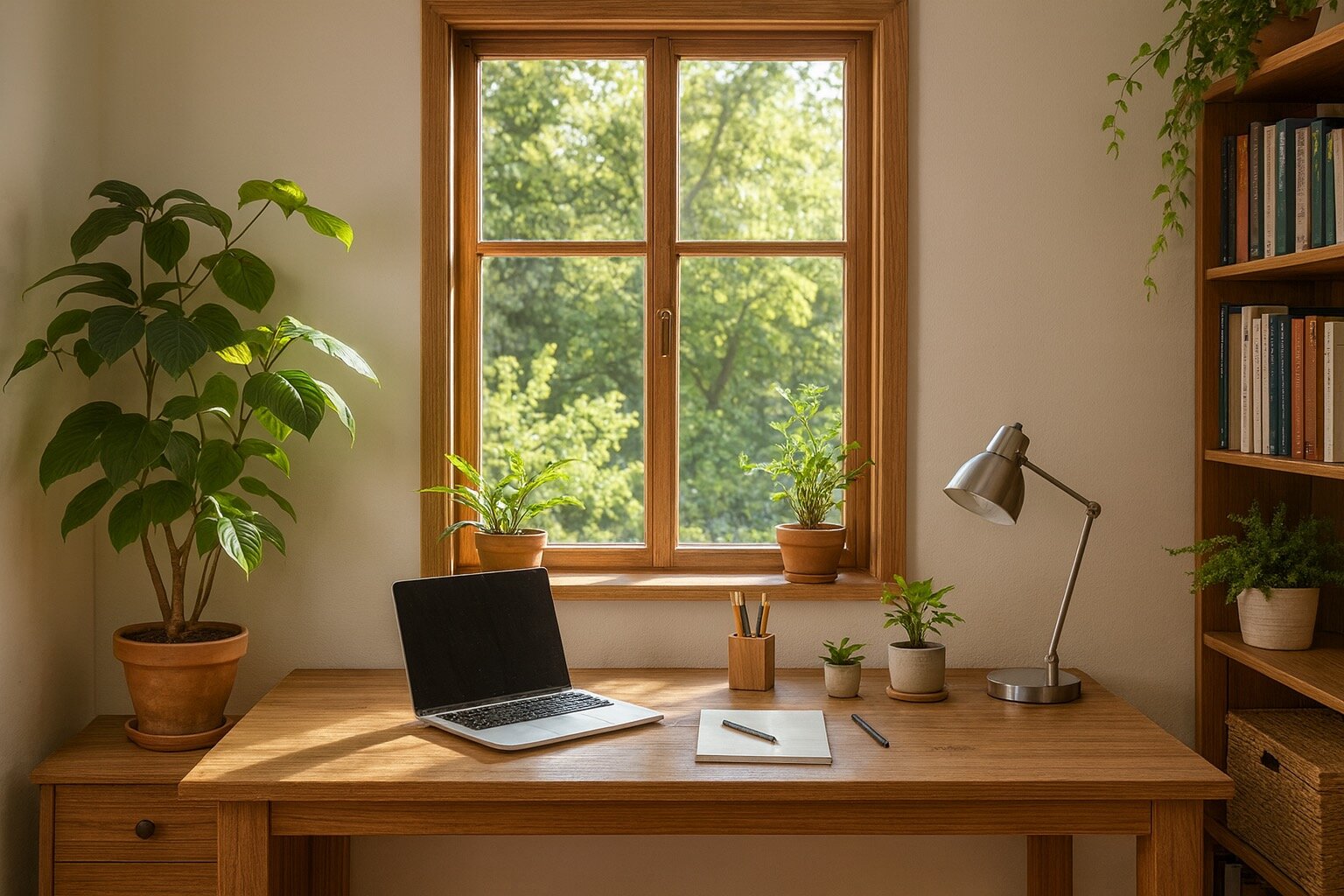
Home office with a view of trees
2. Visual ecology: nature, brain, and geometry.
2.1 Biophilia: what happens to the body.
Let’s start with the simple part: the body.
Terrapin calls the first biophilia pattern “Visual Connection with Nature”: a direct, unmediated view of real natural elements (vegetation, water, sky, animals), close enough for the body to react in real-time to their variations.
It’s about seeing a living world that moves even when you stop.
When you look at a “good” natural landscape with trees, water, different plants, some animals, and even some human signs (houses, paths...), a rather trivial thing happens:
your body breathes a half-sigh of relief.
Studies on this visual connection with nature say that:
- blood pressure and heart rate decrease;
- heart rate variability (HRV), an indicator of recovery capacity, increases;
- anger, sadness, irritability decrease;
- attention, concentration ability, and general mood increase.
And it doesn’t take a week-long retreat in the woods.
We’re talking about minutes:
Already in the first few minutes of contact with greenery – whether a short walk or just stopping to look at a natural scene – many studies record measurable improvements in mood and some physiological indicators.
It’s not just “I feel a bit better”: the body enters a mode more suitable for recovery.
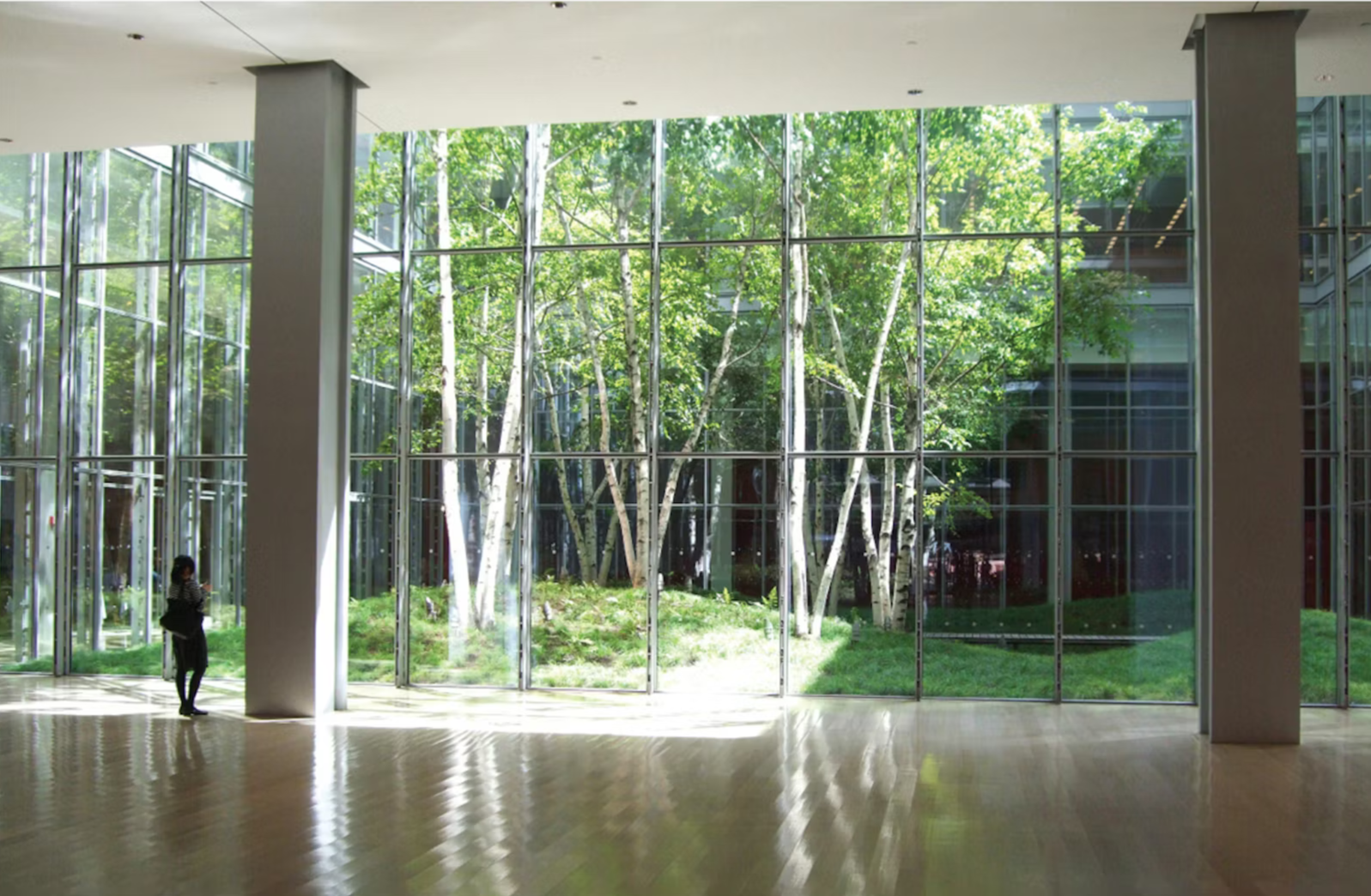
New York Times Building, Renzo Piano BW + Fox & Fowle, New York, 2007
There’s another interesting detail:
It’s not just about how much green space you see from the window, but also what kind of green it is.
Many studies suggest that the perception of variety – different trees, shrubs, flowers, shapes and colors – is associated with greater well-being compared to a “flat lawn,” all the same.
A small but lively garden, full of diverse species, can nourish more than a large mowed lawn.
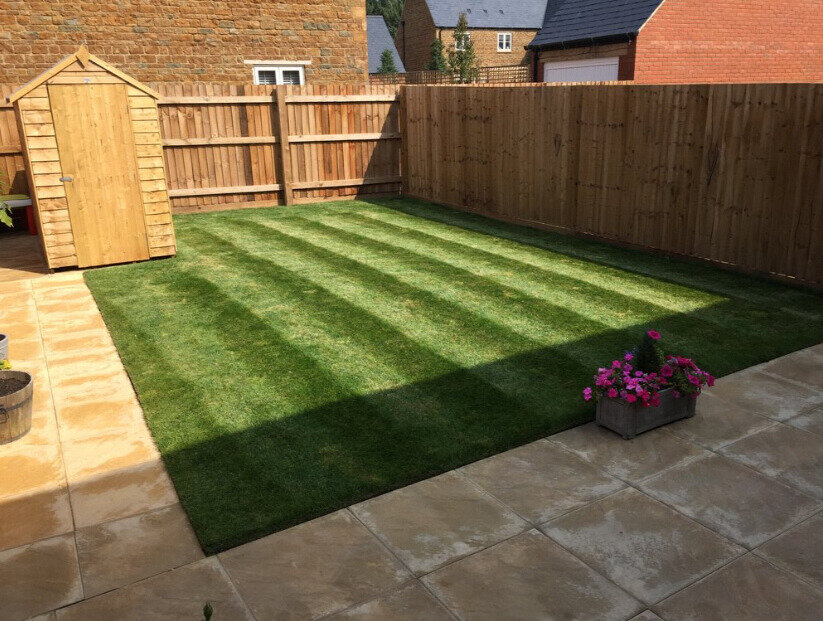
Small backyard lawn
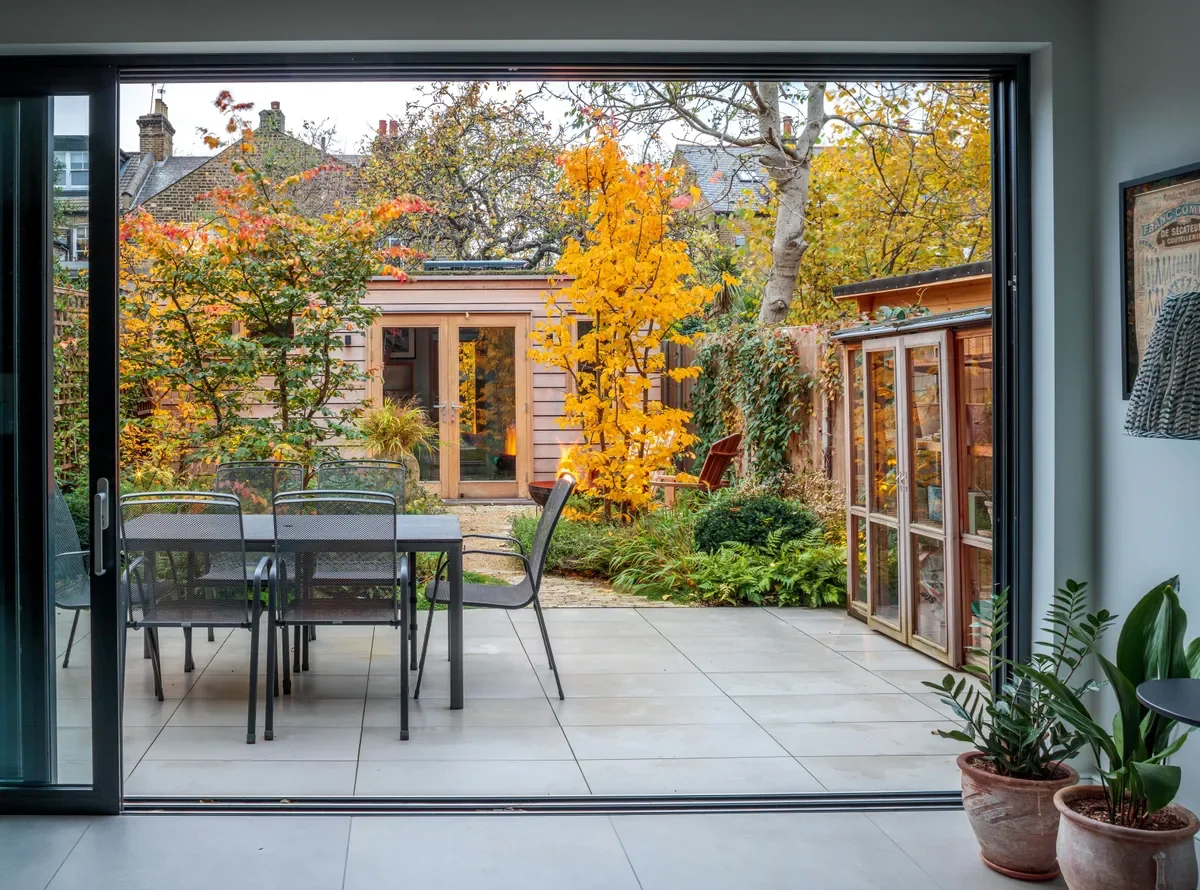
Small garden with trees and biodiversity
2.2 Attention, window, and “two systems”
Attention also benefits.
Stephen and Rachel Kaplan formulated the Attention Restoration Theory, which practically states:
«Attention restoration theory posits that people can concentrate better after spending time in nature or even just after observing natural scenes.»
– Stephen & Rachel Kaplan
In essence, the view of nature catches attention “sideways,” allowing your mind to wander a bit.
Nature captivates you without demanding effort: it’s what Kaplan calls soft fascination.
Simply put: the “muscle” you use to stay focused on a task can relax its grip, without you falling into lethargy or rumination.
It’s a structured break: there’s something to look at, but you don’t have to “hold on.”
The result?
After a real break looking out the window at something alive, you don’t just “feel better”: you function better.
It’s strange, if you think about it:
we measure calories, steps, heartbeats... and then we treat daily sight as if it were a neutral thing.
It is not.
2.3 Body budget: the body’s “bank account”
So far, we’ve talked about effects on the body.
But why does the brain react like this to a natural scene?
Neuroscientist Lisa Feldman Barrett, in essence, tells us:
the brain is not a passive sensor, it’s an accountant.
Every moment it anticipates what will happen and prepares the body accordingly: hormones, heartbeat, attention, posture.
She calls it the body budget: an energy “bank account”.
The interesting thing is what it uses to build these predictions:
- signals from the body;
- memories;
- and the environment you see in front of you.
If outside your window you see trees, seasonal cycles, light filtered by leaves, the implicit message is:
«Resources present, no immediate threat, you can lower your defenses.»
The brain literally recharges the body budget: it lowers alertness levels, rebalances energy, loosens muscular rigidity, frees up some margin to think and feel.
If, on the other hand, your visual landscape is made of hard and uniform surfaces, glaring lights, traffic, advertising, the implicit message is:
«Unstable environment, many variables to monitor, stay ready.»
It’s a chronic tax on your body budget.
(And no, it’s not a matter of “artistic sensitivity”: it’s basic neurophysiology.)
3. The geometry of nature, when buildings behave as landscape.
At this point, the question is inevitable:
“Okay Nicholas, but I can’t live in a forest.
I have a house, a street, buildings around. What do we do there?”
Fair question.
Here enters a simple idea, which theorists call “organized complexity,” but which you’ve seen a thousand times.
Think of the difference between:
- a historic alley, with facades, windows, cornices, balconies, shadows;
- and a large box of glass or smooth panels.
In the first case, the eye always has something to follow:
large shapes, small details, a rhythm of solids and voids.
In the second, you either get bored or are dazzled: there’s nothing to “hook onto.”
In essence, the brain wants a rich and complex vision to be stimulated and to “wander” exactly as it does when we look at nature.

Streets in the city of Siena. Credit: Earth Trekkers
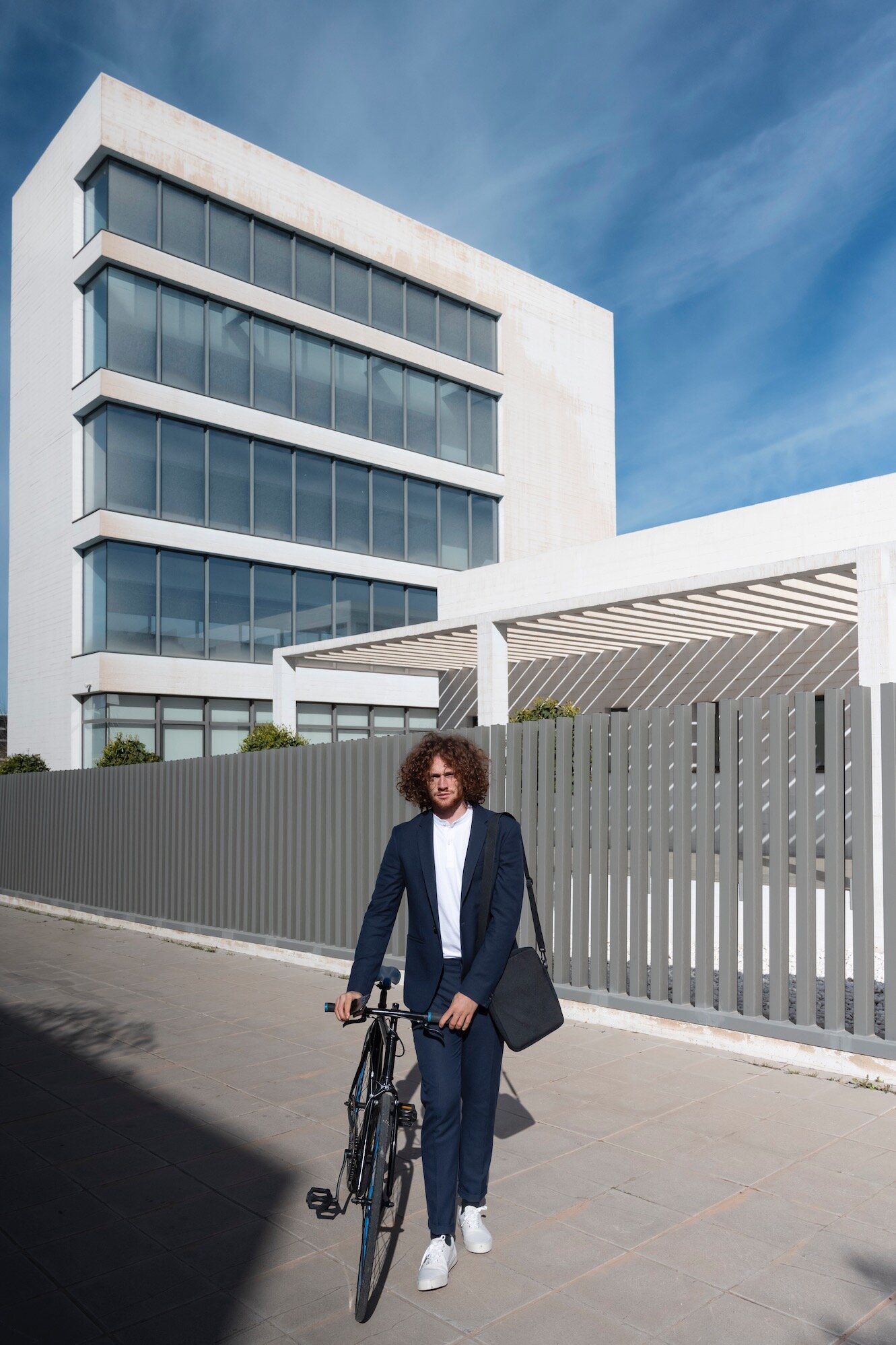
Modern street with modern landscape.
A building, willingly or unwillingly, is always a piece of landscape:
it can resemble a forest more (with levels, depth, details),
or a neutral box.
If you can’t have a forest outside your window,
you can at least have buildings that, by their very nature, behave more like a living landscape and less like a flat cardboard cutout.
This too, every day, enters your body budget:
either it gives you something back,
or it consumes you in small doses.
A building is not just “a function” or “a roof over your head.”
It is part of the daily emotional landscape for all of us.
4. And what about those who don’t have it? Biophilia as infrastructure, not luxury
Speaking of buildings, views, and the impossibility of moving/choosing.
If just 5-20 minutes of view of nature or lively architecture are enough to:
- reduce stress,
- improve attention and mood,
- help the brain catch up with its energy account,
the question becomes very concrete:
Who, today, can afford this “window to the good world” every day... and who cannot?
For many, the answer is a home overlooking a busy street, or an office with windows facing parking lots and roundabouts, in neighborhoods with absent or “decorative” greenery.
This means growing up and living in environments that never give you a true signal of abundance and stability.
The body budget more often operates in the red.
And in the long run, this adds up to everything else: precarious work, traffic, noise, pollution.
When we talk about biophilia, then, we are not talking about “making a green wall.”
We are talking about:
- where we place trees in a city and how we manage public space;
- what children see from school windows;
- what our eyes see outside our home windows.
The most recent syntheses are clear: those who live in greener neighborhoods have a significantly lower risk of anxiety and depression compared to those surrounded only by asphalt and traffic.
In some studies, comparing the greenest areas with those almost devoid of nature, the difference reaches order of 15-20%.
If we look at childhood,
a Danish study of over 900,000 people shows that growing up with a lot of greenery around the house reduces the risk of future psychiatric disorders, including anxiety and depression, by up to half.
Finally, a study in England with data on 40 million people shows how the number of deaths from cardiovascular diseases approaches between the wealthy and less wealthy in green areas.
Conversely, in areas without greenery, the number of deaths for the less wealthy far exceeds that of the more affluent classes.
(So the “fancy avenue” actually reduces mortality in the vicinity.)
It’s silent public health.
Biophilia, here, ceases to be a whim and becomes a matter of spatial justice.
Those who design cities and buildings decide, in fact, who will have a healing landscape and who will not.
5. Where you can start, tomorrow morning, in 2 steps.
That was a lot of theory, I know.
Let’s bring it down to earth.
We can’t always change the neighborhood.
But we can significantly improve our daily visual ecology.
1. Guarantee 5-20 minutes a day of viewing something alive
Place your desk where you can effortlessly see something alive: trees, sky, a courtyard, even a balcony with plants.
If you have nothing outside, create a small natural “front” indoors: a real plant, two pots, a piece of vertical garden, an aquarium.
2. Choose organized complexity, not just “generic greenery”
Prefer diverse plants, with leaves of different shapes and textures. Diversity beats quantity.
If you opt for an image or a painting, choose a rich and deep landscape with woods, roads, a horizon. Don’t stare at a white wall.
These are not perfect solutions.
But they begin to give your nervous system a different message than “you are enclosed in a box with no resources.”
As artist Andy Goldsworthy reminds us:
«We often forget that we are nature. Nature is not something separate from us.»
–Andy Goldsworthy
Visual ecology is just the first layer of a broader perceptual ecology.
In the next letters, we will remove sight and see what happens to the other senses: what your ears, your nose, your skin consume while you work, sleep, grow.
Always with the same fundamental question:
is this environment recharging or draining my body budget?
That’s all for this letter.
In the meantime, as always,
I wish you a good weekend with splendid views out the window.
-Nicholas
P.S.: if you want to read the rest of the series, you can subscribe by clicking here.
P.P.S.: if you want to introduce Biophilia in your place, you can fill out our «Whisper» to tell us.
It's less than 5 minutes.
If you want to delve deeper into the topics, I’ve listed some of the sources used to write this article below.
Bibliography:
- Barton, J., & Pretty, J. (2010). What is the best dose of nature and green exercise for improving mental health? A multi-study analysis. Environmental Science & Technology, 3947–3955.
- Barrett, L. F. (2017).How emotions are made: The secret life of the brain. New York, NY: Houghton Mifflin Harcourt.
- Barrett, L. F. (2020). Sette lezioni e mezzo sul cervello. Trad. it. Torino: Codice Edizioni.
- Browning, W. D., Ryan, C. O., & Clancy, J. O. (2014). 14 patterns of biophilic design: Improving health & well-being in the built environment. New York, NY: Terrapin Bright Green.
- Kaplan, S. (1995). The restorative benefits of nature: Toward an integrative framework. Journal of Environmental Psychology, 169–182
- Salingaros, N. A. (1998). Theory of the urban web. Journal of Urban Design, 3, 53–71.