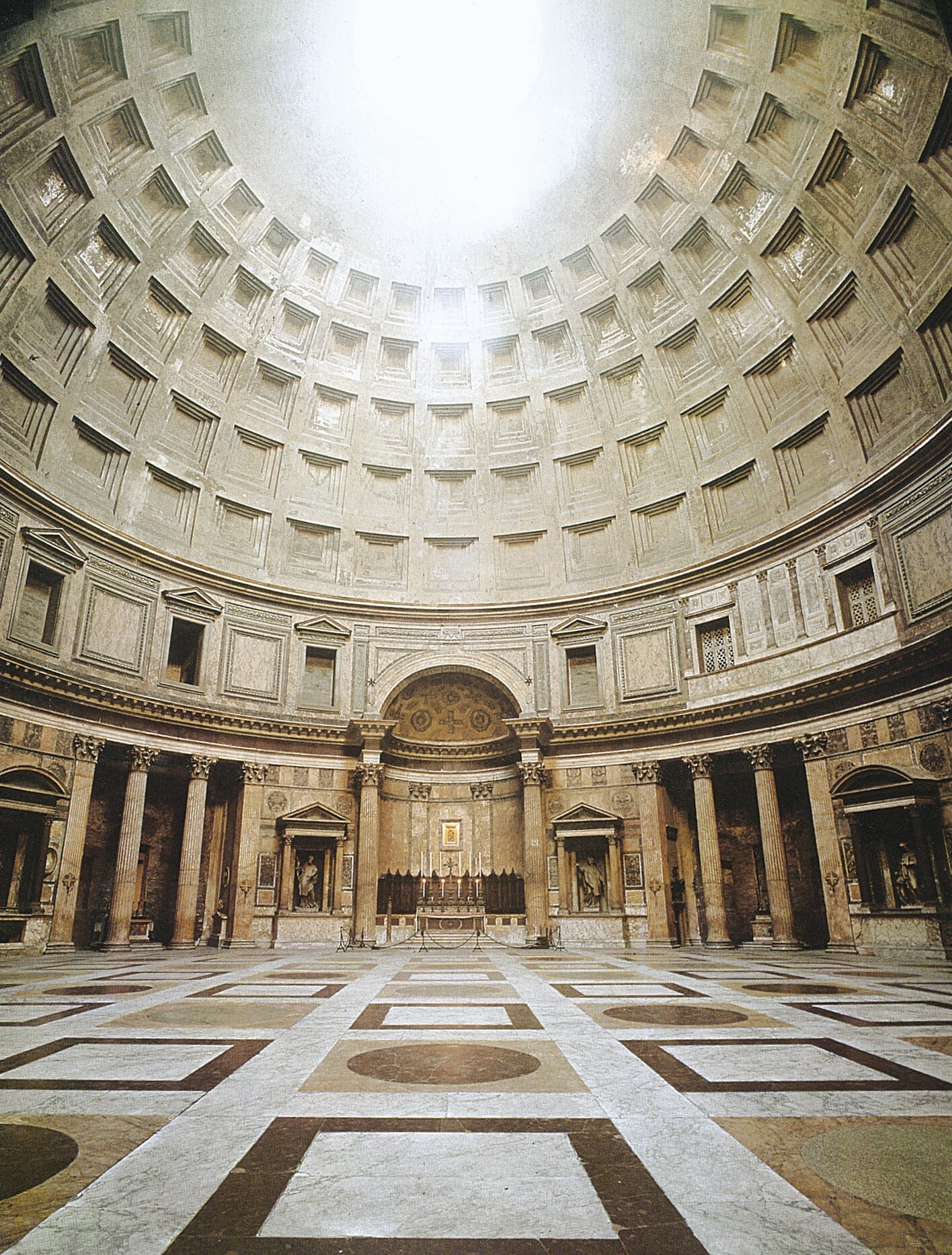
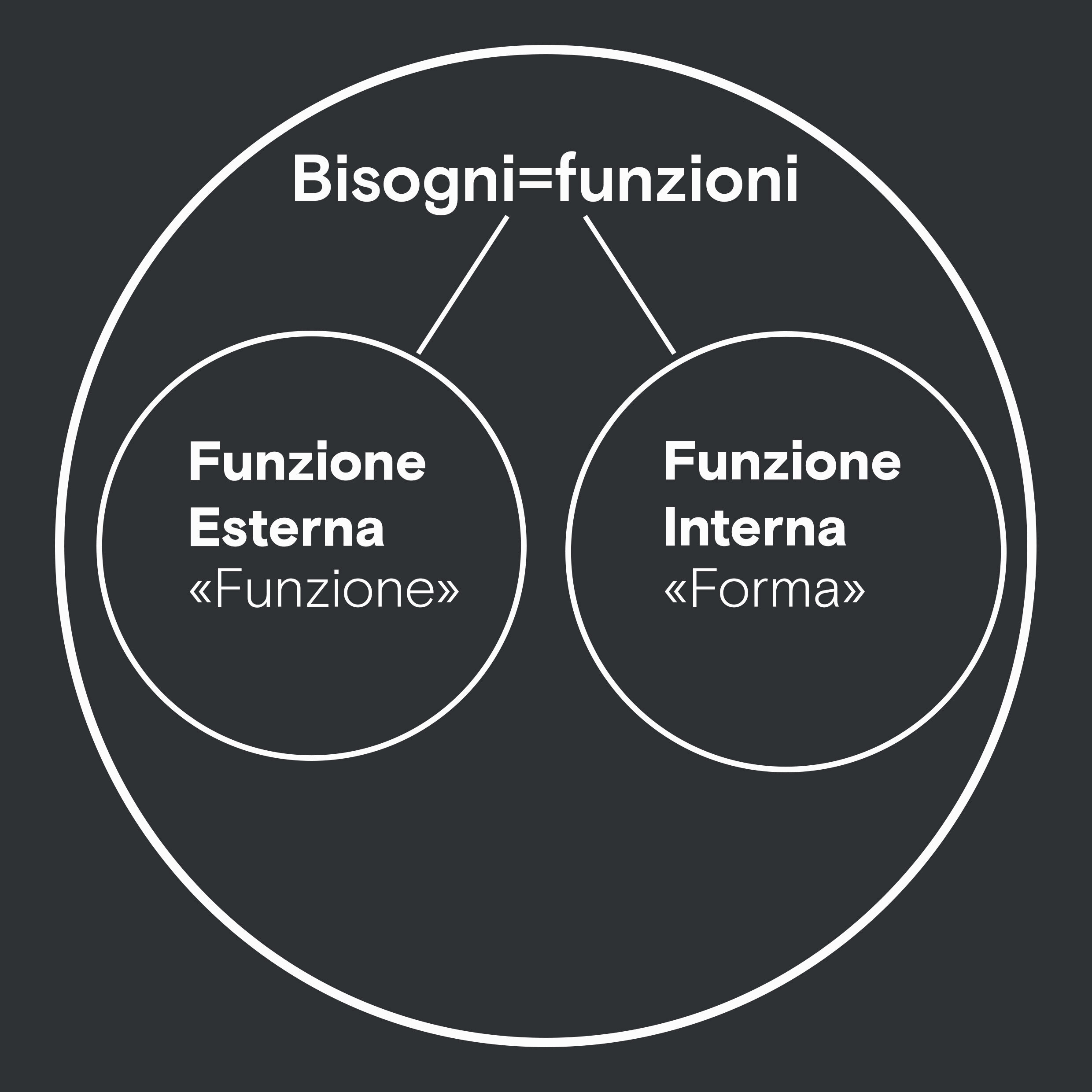
Efficiency or aesthetics (function or form)?
Why not both.
How to eliminate false opposites: from «form follows function» to «form IS function».
Thoughts on Design #1
Monday, 10:32
October 6, 2025
Hello and welcome to the “Letters” of Parallel Atelier,
I’m Nicholas, architect and founder of Parallel Atelier,
as I write this letter, I'm sitting in front of my screen, with Frank Sinatra’s «My Way» in the background (what a boost!), outside the window there's sunshine and an enviable temperature—what a fantastic autumn day!
Today I want to share with you my thoughts on a very important issue, so important that over the last 100 years it has shaped our cities (especially the suburbs), our buildings, and the places where we live.
(Yes, even the screen you're reading this letter on).
I'm referring to a famous aphorism coined more than 100 years ago that has marked the history of society from then until today, from your bank's website to your kitchen, to the furniture you use, to the house you live in.
It is: «Form follows function».
Translated: "better things that work well, then we'll think about the appearance."
In short, I'm talking about the relationship between the form (external appearance) and the function (practical purpose) of an object.
No, it's not a designer's problem, nor an abstract concept,
it's so ingrained in our way of thinking that you use it every day without realizing it, an "invisible filter" you use to look at the world.
When you happen to say:
- "It's beautiful but not functional"
- "It's just an aesthetic thing"
- "Clothes don't make the man"
- "All smoke and no roast" (All flash and no substance)
- "What matters is being beautiful on the inside"
Or again:
- When you make an online payment, you don't care if the Paypal page is pretty, you care that it works!
- When you don't paint your house for a long time, stains form over time and you think: "Oh well, it's just an aesthetic thing," because you care that the house functions and isn't damaged! (and so you don't paint it for a long time still).
- When you leave the house in a hurry in the morning without much attention to your appearance, (I'm first in line here, I confess), because "appearances don't matter" and you only care about getting your errands done.
The point is that form (external appearance) and function (practical purpose) are for all of us two opposite poles to choose between, like a "pendulum" that swings, some leaning one way, some the other.
(Which side are you on?).
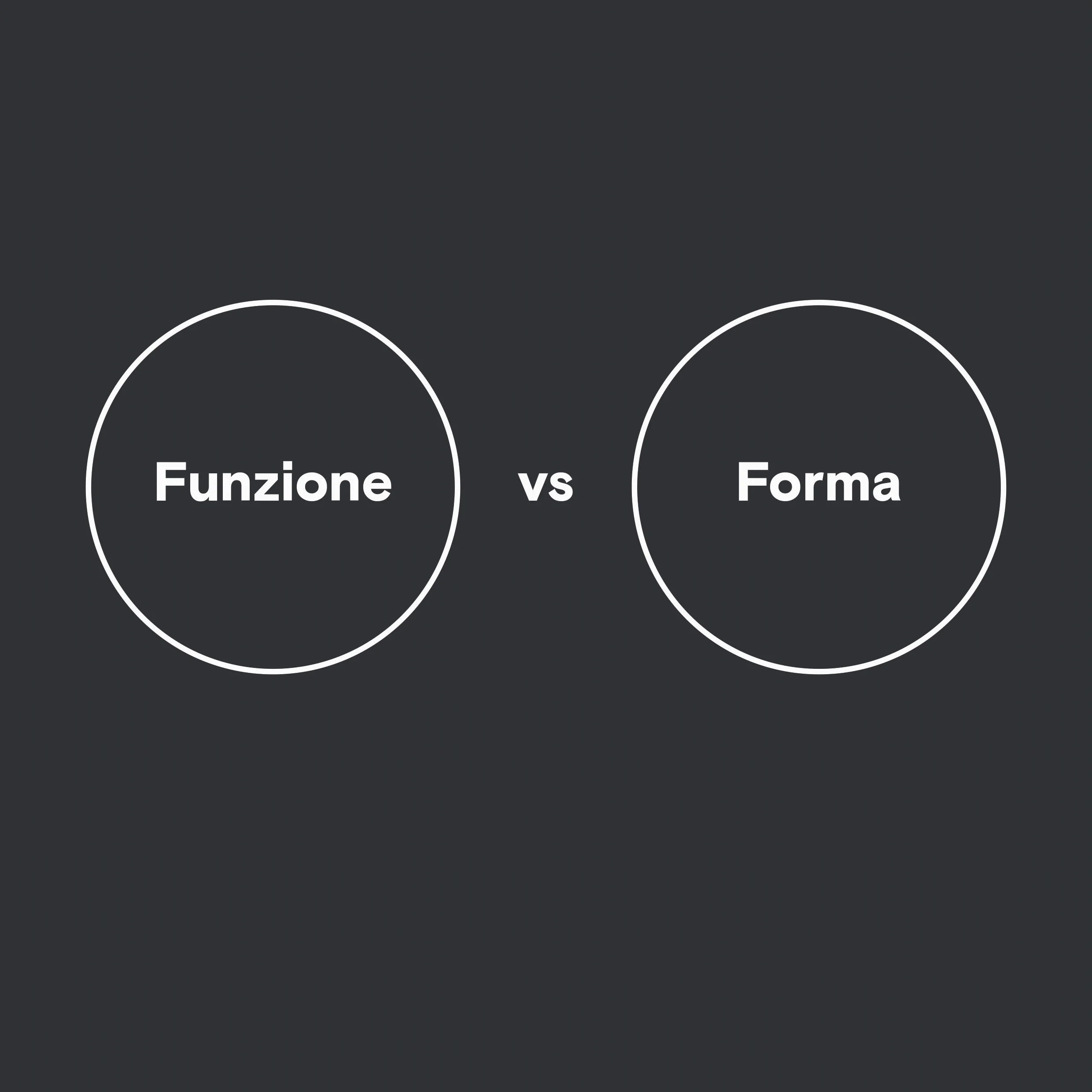
I found myself reflecting on this topic by chance, after a year spent studying the architect Frank Lloyd Wright (1867-1959) and his mentor Louis Sullivan (1856-1924).
These gentlemen challenged me and raised doubts that I would like to find answers to with you in this letter:
- Am I sure that function and form are opposites?
- What exactly does "function" mean?
- The opposite of "functional" should be "inefficient", "dysfunctional", what does form have to do with it?
- Is there another way to interpret "form follows function"?
Given the enormous impact of the issue on your life and mine,
before expressing my thoughts and answering these questions,
it seems necessary for me to broadly outline the upheavals that have occurred over these past 130 years to understand how we got here.
(And to think with that filter that you and I use!)
Ultimately, as you may have gathered, we are not talking about architecture, but about a way of looking at the world, behaving, and thinking that we have inherited.
(Unconsciously for the most part).
In the end, with the answers I've found so far, we'll see together if it's possible to change this filter that you and I use every day.
(Like when I go to the optician and change my lenses…).
Good, now that we've framed the problem, follow me on this journey!
(Meanwhile, Spotify starts playing "Fly me to the moon," a great song to begin this crossing!).
The problem is stated and it is: "form follows function."
("Form VERSUS function!" you might say).
Start looking at it with me:
- At one extreme, "function":
- the efficiency of numbers,
- the economy of construction,
- faith in science and progress,
- "rationality."
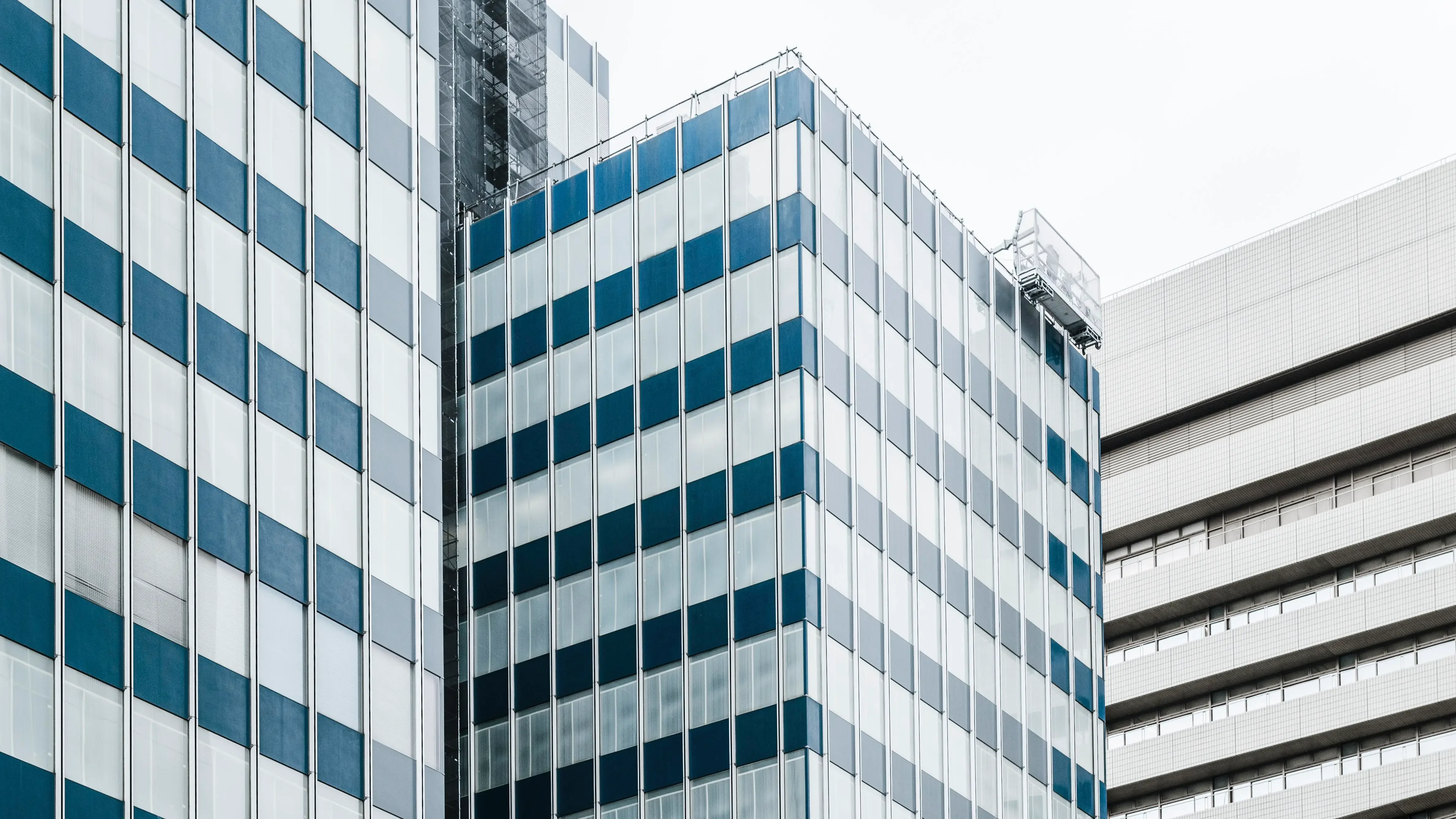
Modern office building.
- At the other, "form":
- flair,
- "concepts,"
- spectacular and captivating form,
- creative genius,
- the communicative capacity of a building.
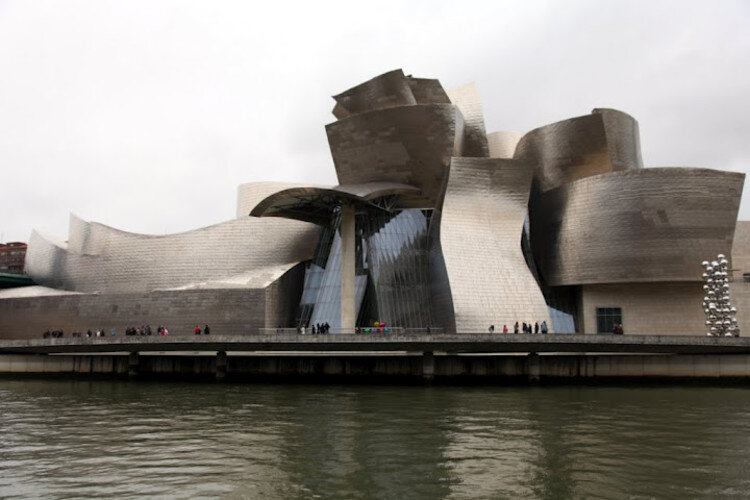
Guggenheim Museum, Frank Gehry, Bilbao.
But both extremes, over time, have degenerated into stereotypes that we see every day around us:
For function:
- The trivialization of buildings into compact, "efficient," "practical" forms.
- Boring, identical boxes!
- The stereotype/caricature of the serious, "practical," and reliable engineer (you're thinking it too, admit it..."he knows how to build, not architects!")
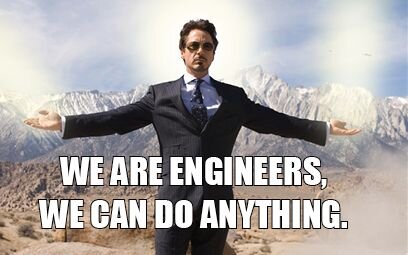
For form:
- Costs soaring.
- Buildings that function poorly, are not "practical" but are surprising!
- The stereotype/caricature of the architect-artist-creative, who has "good taste," who thinks about the "aesthetic part," who makes "little drawings" on paper, then crumples it up and creates a building from it.
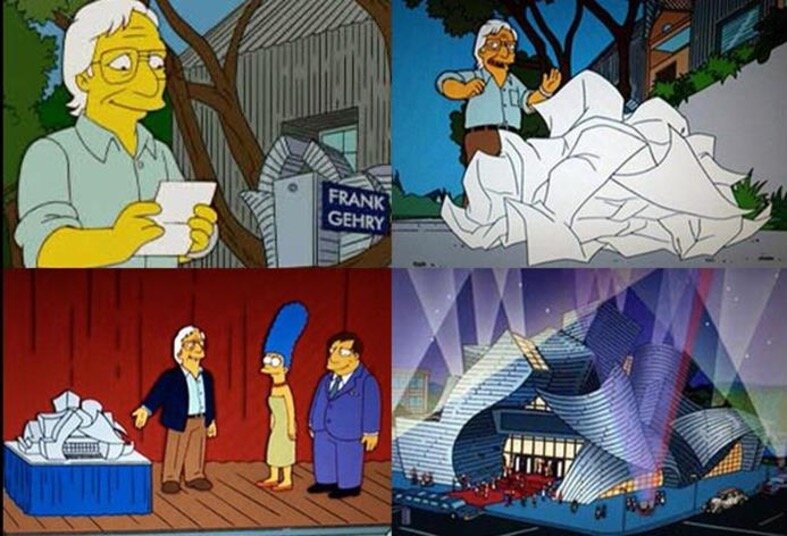
Frank Gehry in «The simpsons»
Now, it seems clear to me that to understand how we got here, we need to look at where we started!
I'll take you to see the birth of both extremes of this pendulum and, above all, who invented "form follows function"!
(It seems obvious to me that something, before existing, did not exist!)
Before catapulting you into other eras and other places, I think it's right to provide you with a small map of our journey, so you can orient yourself.
You don't set off somewhere unknown without a navigator, do you agree? I imagine so.
So, here's your map.
The matter of our "pendulum" is actually a story of knights, ships, flowers, and iPhones.
- To understand function we will have to look at:
- industrial society, the modern movement, and functionalism of the 1920s
- To understand form we will look together at:
- the information society (i.e., how ours was born) and post-modernism
The topic is not as trivial as you may have understood, so I leave you the (underlined) links to delve deeper into the aspects that interest you most.
Let's go!
1-Function:
1.1 Industrial society in the early 1900s
Coming together is a beginning.
Staying together is progress.
Working together is success.
-Henry Ford
As before, to proceed logically, we must frame the situation.
Go back in your mind more than 100 years ago with me,
close your eyes…
Now reopen them… We're in the 1900s!
Look around, the scene around us is more or less this:
- Electricity (nightlife!), oil, chemistry have been common for about 30 years.
- Factories have been born that work 24 hours a day producing products on a large scale.
- These factories use machines to optimize production. (Hey! Did you know that Mr. Ford, in America, has just invented the «assembly line»?).
- To be fast, machines produce standardized elements in series. (These machines, however, are not as technological as ours today: they are more "primitive," with "simplified" controls; so the parts produced are also "simplified.")
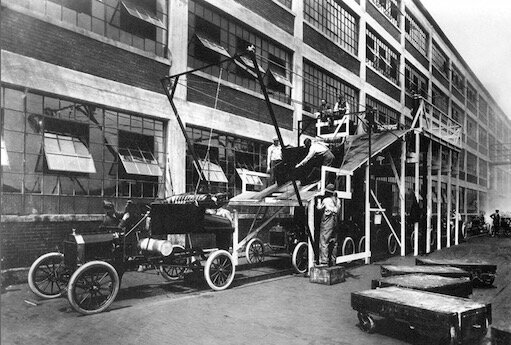
A-line assembly line at Ford, 1910
You might think:
"Fantastic! Trust in progress, science and technology finally taking their rightful place, life's not bad these days!"
Hold on, don't get carried away. Now let's turn the corner of this factory and here's what we see:
- The population in Europe is increasing rapidly. (Just imagine that here, in the last 50 years, in Europe, it's as if almost three «Italies» of our 2025 were born).
- People are crowding into cities to work in factories.
- Obviously because life is better in cities. (And there are fewer deaths!)
- Hygienic conditions are improving, but they are becoming critical with the number of people arriving for work!
- Obviously, housing is needed, lots of housing and quickly! (Meanwhile, three «Italies» have been born…)
- So our cities must grow, a lot, and fast!
Let's fast forward a bit, we're in the 1920s.
(While we were going at 2X speed, we missed something called «World War I»…)
And you will tell me: "Great! So, besides needing a lot of houses, now we also have to rebuild half of Europe!"
You hit the nail on the head.
Against this backdrop and with these problems to solve, the protagonists of functionalism and the modern movement (which makes functionalism its flagship) enter the scene.
Speaking of horses, as far as we're concerned, we could call them: «the Knights of Function».
(And we'll name four of them, like the Four Horsemen of the Apocalypse, only these aren't "ugly and bad").
1.2 The modern movement and functionalism
Le Corbusier and the love for ocean liners
"A house is a machine for living"
-Charles-Édouard Jeanneret-Gris (Le Corbusier)
I've shown you the social and economic context, but to understand our 4 knights, we need to look at how the world around us "materially" presents itself.
The world is split in two:
- on one side, the roaring development of science and engineering (advances in biology, botany, medicine, physics, ocean liners, industries…). Looking around, their products look more or less like this:
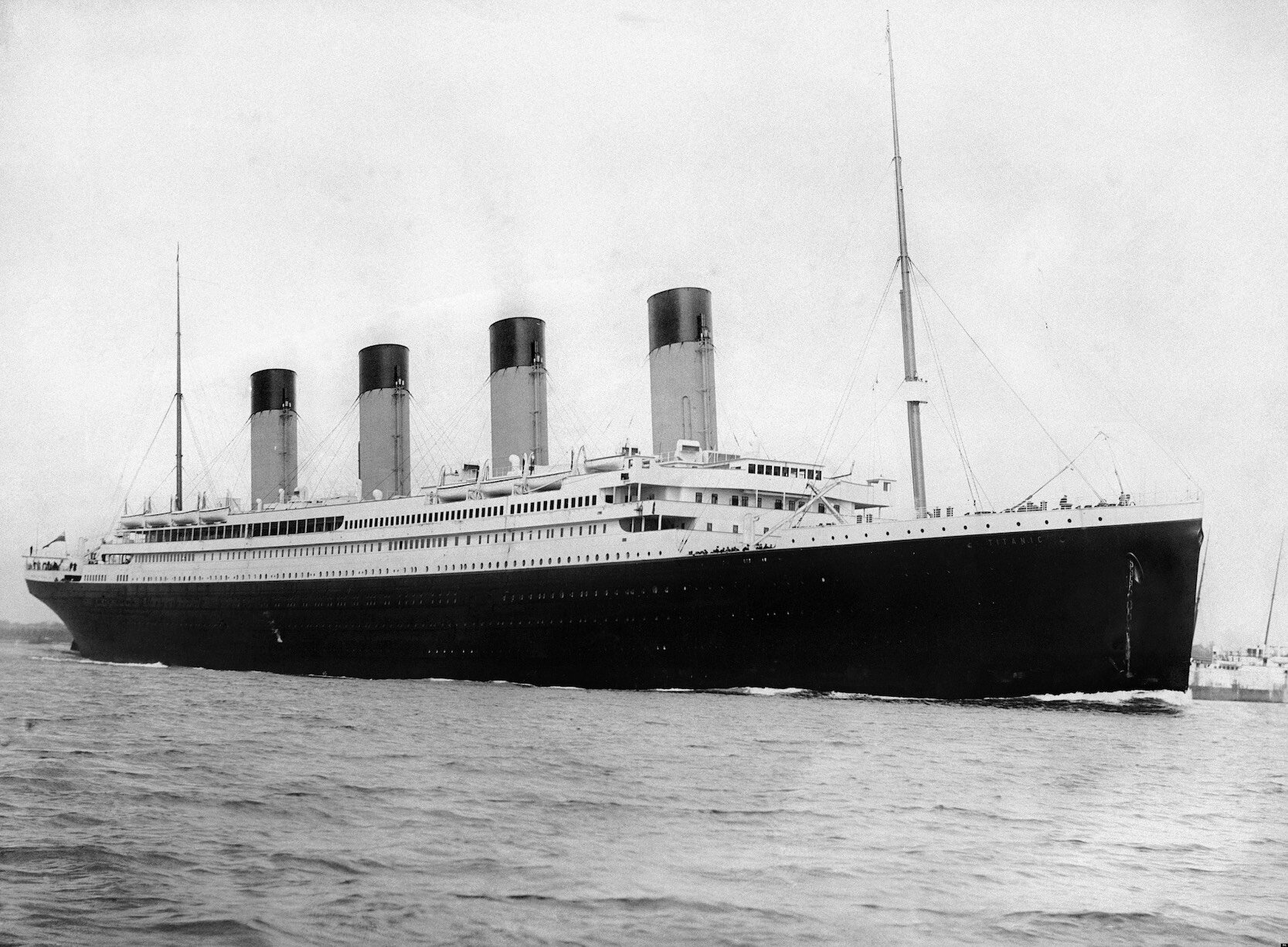
RMS Titanic (White Star Line), 1912
- on the other side, architecture is the offspring of fine arts academies, (_Doric, Ionic, Corinthian order… remember?). What they produce looks more or less like this:
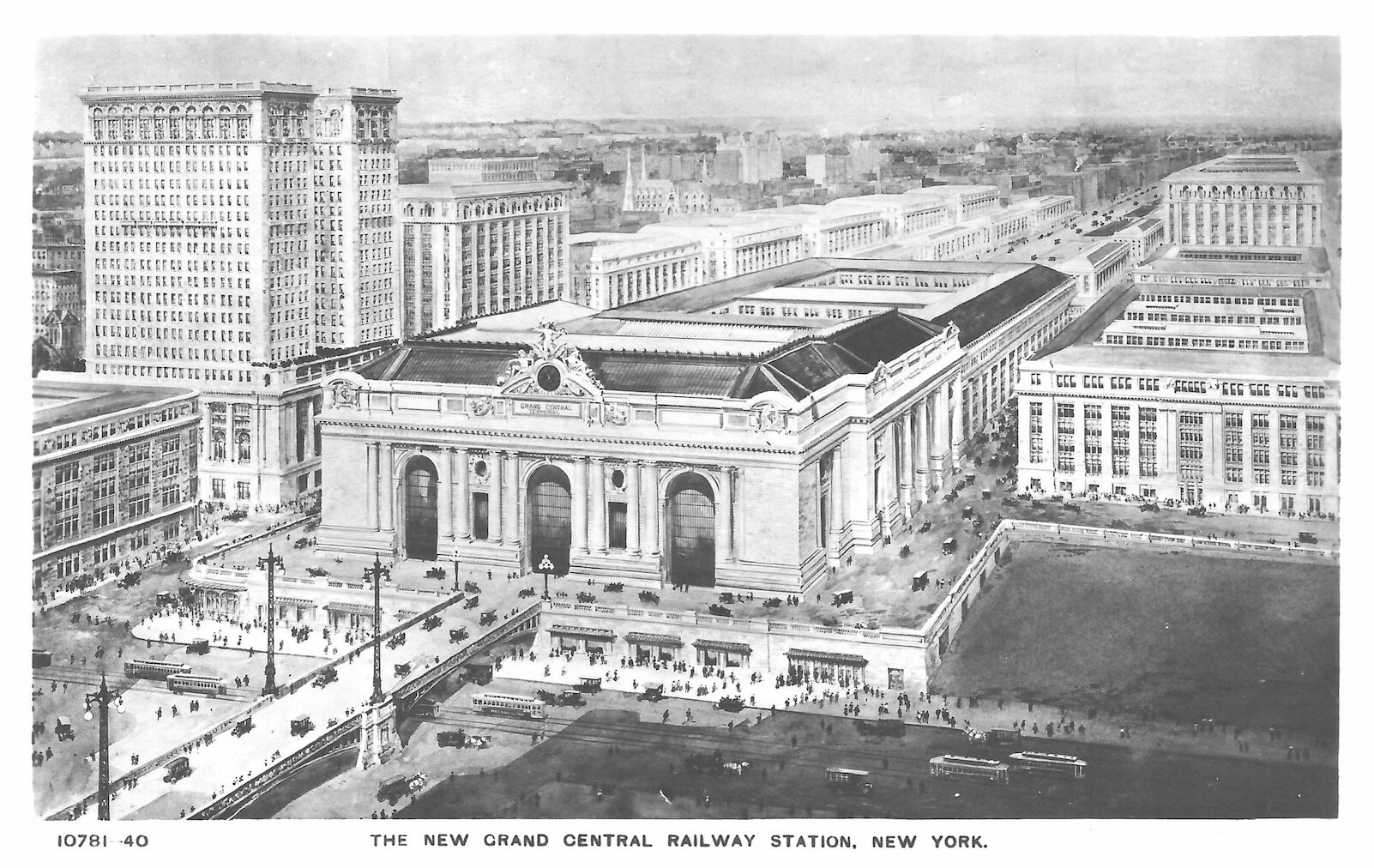
Grand Central Terminal, New York, completed 1910
Do I need to comment, for us in 2025, on the difference between these two photos?
I imagine not, we already know what direction we eventually took.
In these years, "form follows function" has already existed for about 30 years and is beginning to show its first effects.
The first knight in our story is Le Corbusier (1887-1965), born Swiss and naturalized French; we are therefore in France, specifically in Paris, which in these years (we are in the 1920s, remember?) is a cultural beacon.

Charles-Édouard Jeanneret-Gris, known as Le Corbusier.
And so in 1923, Le Corbusier publishes «Vers une architecture».
(A phenomenal book, a manifesto with passionate and provocative tones).
Here he shows us photos of modern ships as "the image of the new architecture" with enthusiastic captions below.
His is a war against the dogmas of fine arts academies and against architectural orders and any kind of fashionable "style." (A lion's courage…).
He demands that our homes be comfortable, bright, with less bulky "stylish" furniture and more space to live and move!
(Does that sound familiar in 2025? I think so).
He tries to transport the "exact" spirit of the naval engineer into architecture, pointing to a model to follow.
Ships and cars are so exciting for him that he has the idea that houses should be mass-produced like cars, so he invents a prototype called "Maison Citrohan" (exactly, Citrohan like Citroën cars; the Citroën car company is French and has just been born in these parts).

Prototype of Maison Citrohan at the Weissenhof exhibition, Stuttgart, 1927
How can one disagree with him!
During this period, cruise ships were at the height of a head-to-head competition between the British companies White Star Line (Titanic) and Cunard Line (Aquitania) who rivaled with each new model for speed, grandeur, and luxury.
(And his house now strongly resembles the Titanic!)
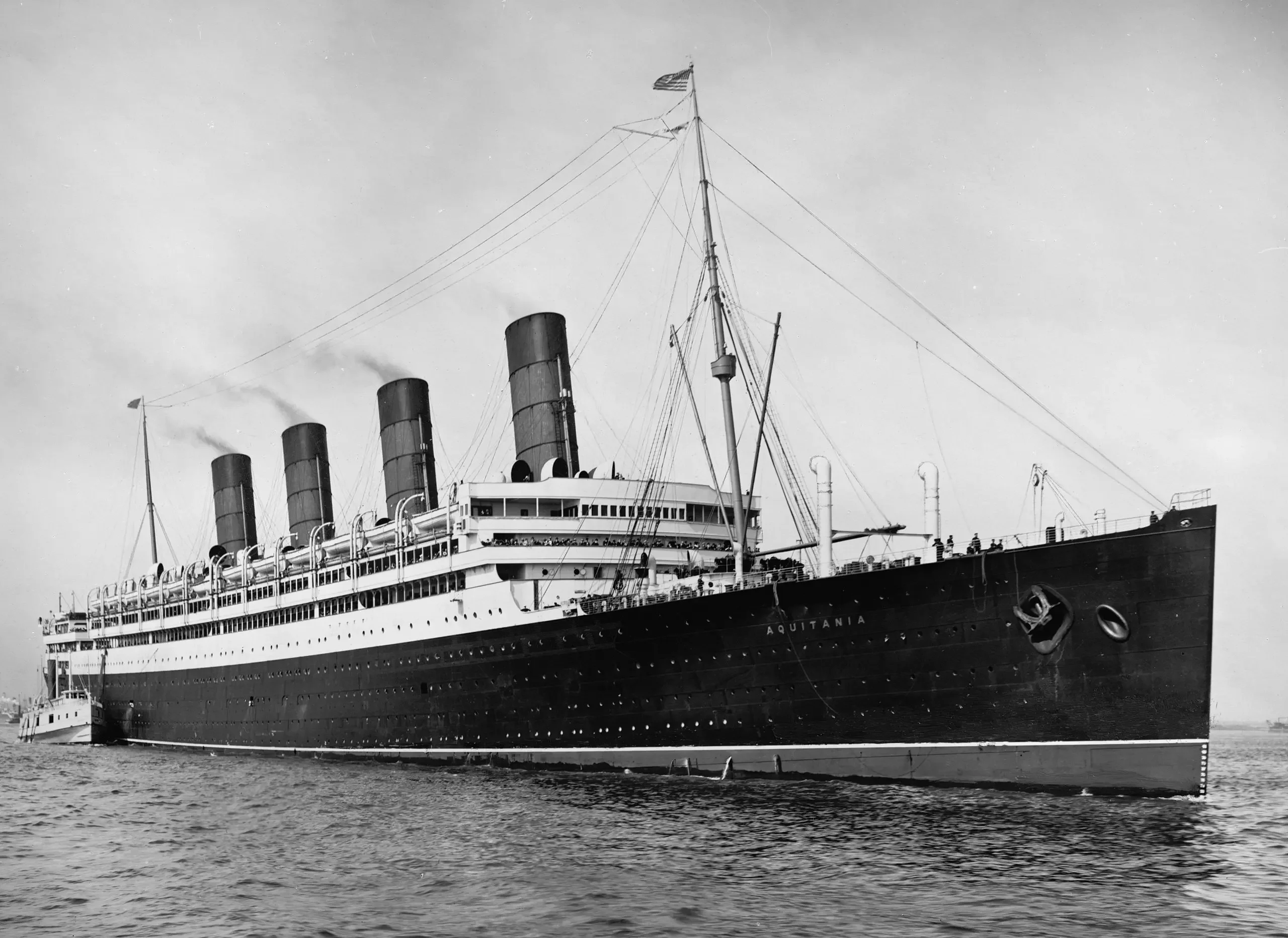
RMS Aquitania (Cunard Line, 1913) cited by Le Corbusier, had been built to surpass in size and speed the Titanic (White Star Line) which sank the previous year (1912).
His love for ships is quickly explained,
he finds here a model of pure reason and function to follow:
- the efficient use of space,
- internal organization,
- zoning of uses (functions),
- the high level of engineering that impressed with its dimensions,
- the exactness of "clean" lines.
A perfect example of «form follows function».
Architecture must also be like this in the new century!
Against this background and for these reasons, in his book we find the phrase:
"A house is a machine for living" (which now explains itself).
However, today in 2025, we know that one of the four funnels of the Titanic had been added for aesthetic reasons and to give the impression of a more powerful and faster ship!
Just as the interiors of its rival Aquitania (which Le Corbusier cites), with their luxury and style, represented what Le Corbusier was fighting against!
It seems, therefore, that even naval entrepreneurs had considered "formal" aspects in the model of "pure function."
So either they were fools or something is escaping us…
The Bauhaus and functionalism
"Less is more"
-Mies van Der Rohe
(Meanwhile, «Santa Claus Is Comin' to Town»: it's cool, but that seems excessive! I'll skip ahead in the playlist…).
While Le Corbusier in France champions his love for ships and his battle against "architectural orders," I need to take you on a trip to Germany to show you what his colleagues are up to over there.
Here are some examples (no, we're not in 2025, even though we see them everywhere today: we're in 1925!).
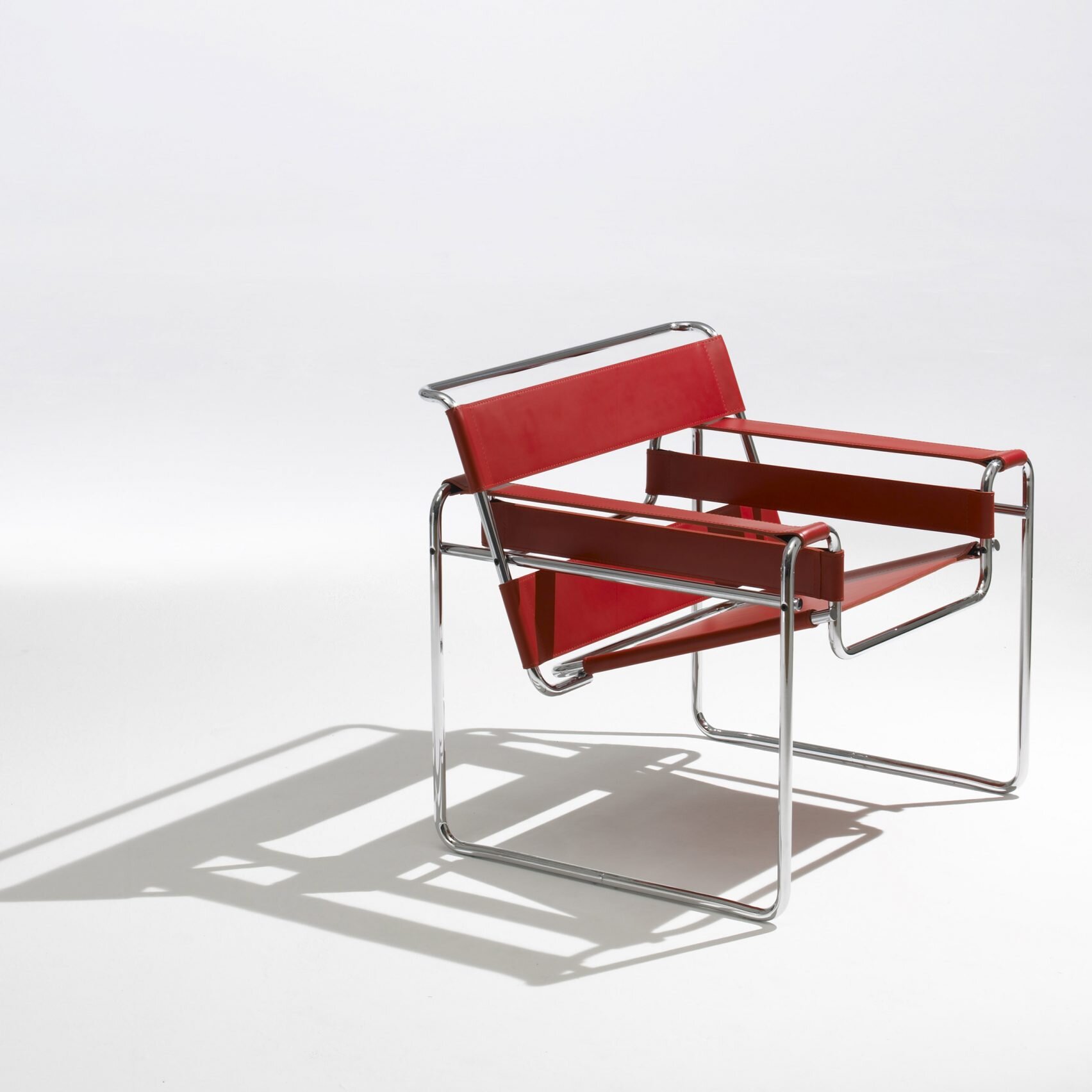
Marcel Breuer's Model B3 chair (Wassily Chair), produced by Knoll
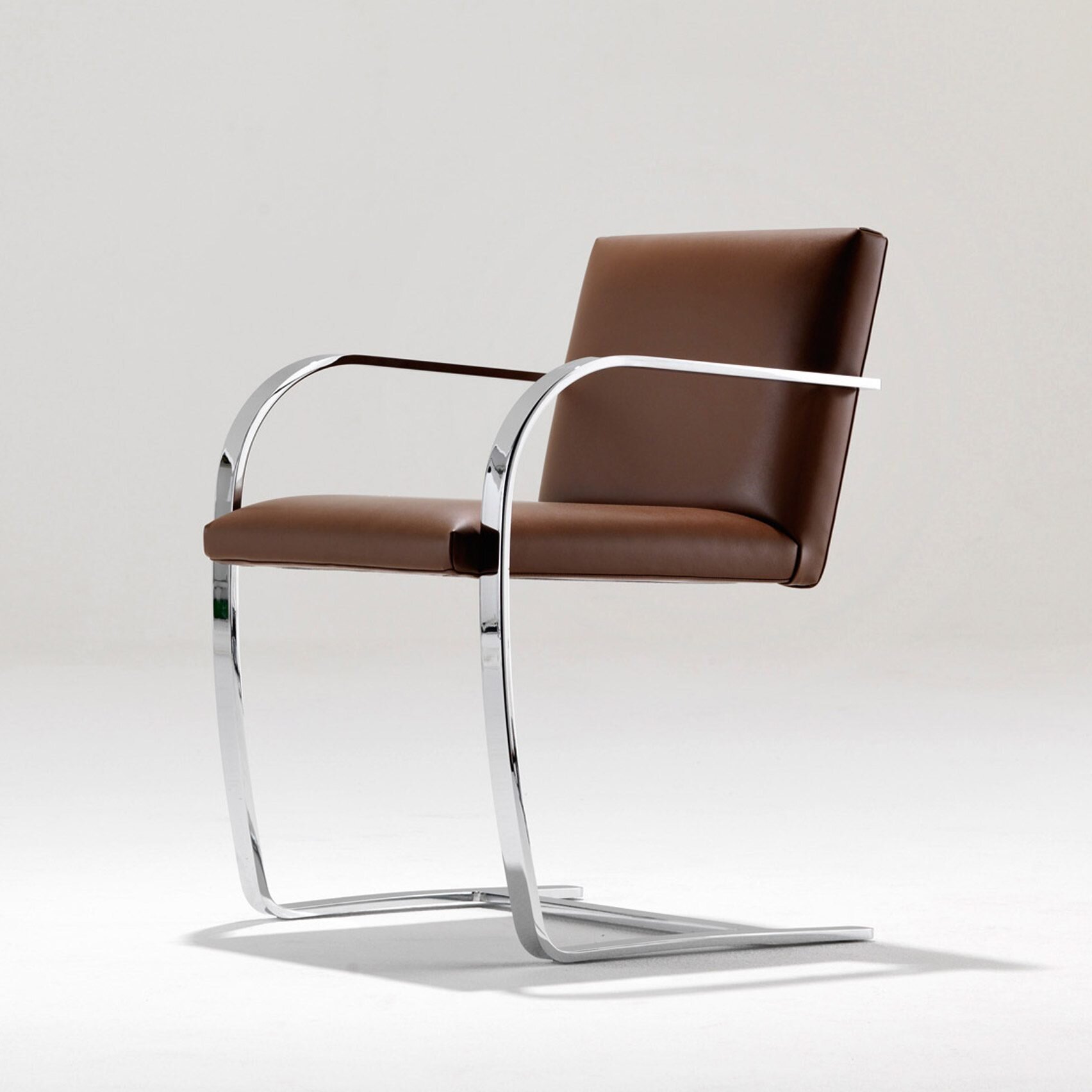
Mies van der Rohe's Brno Chair, produced by Knoll
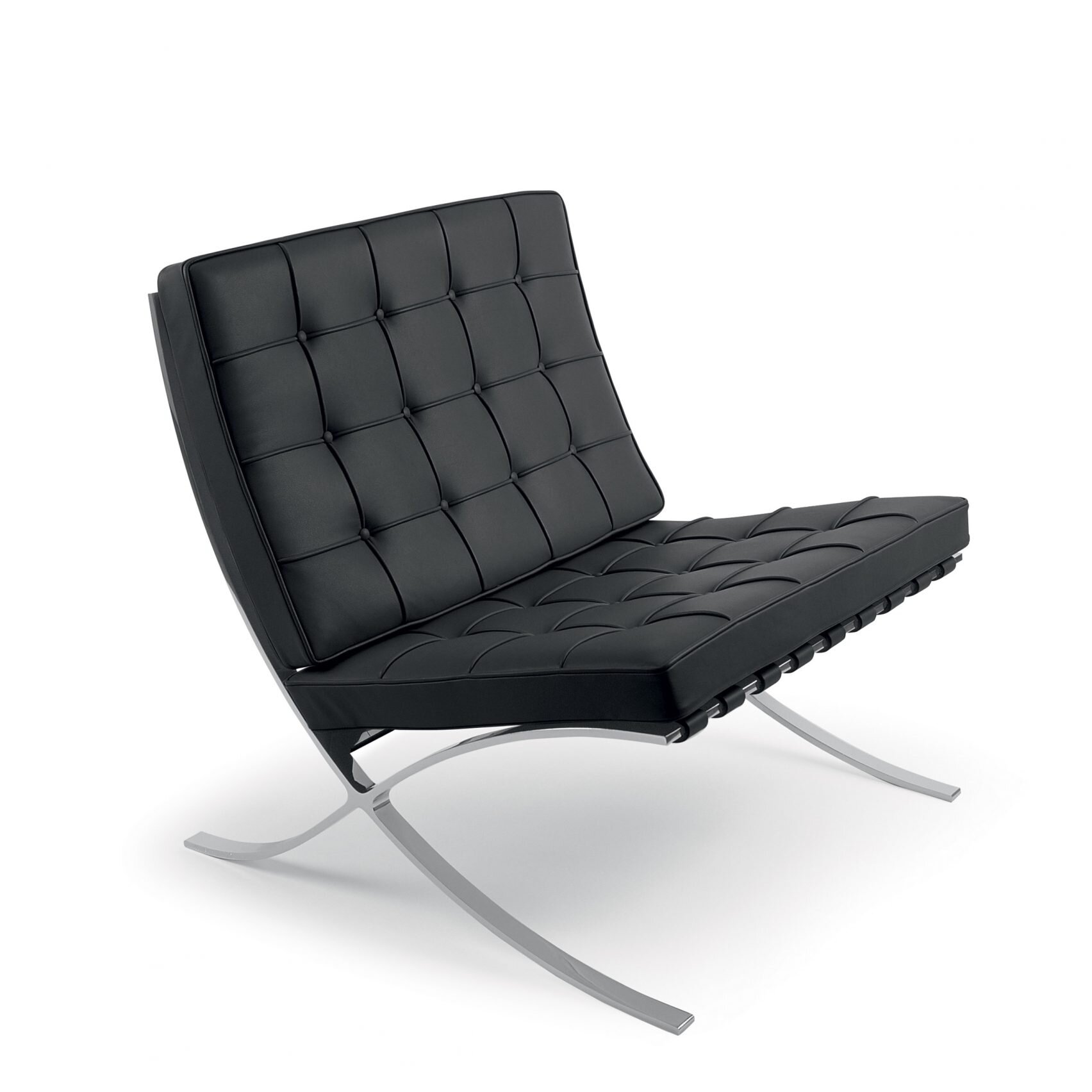
Lilly Reich and Mies van der Rohe's Barcelona Chair, produced by Knoll
In Germany, we meet our second knight, Walter Gropius (1883-1969), who founded a school of craft, art, and architecture that would later become world-famous: I'm talking about the Bauhaus (1919-1933).

Walter Gropius
Gropius's idea and goal are clear yet revolutionary:
To unite artists, craftsmen, and industrial production into a new chain of "total art."
At this point there will be no more boundaries between craftsmanship, sculpture and painting; all these aspects will be one thing: architecture
-Bruno Taut
More than a school, the Bauhaus became a true cultural movement, a reference point for the Modern Movement. (Essentially, the victory of function and reason over pre-packaged "styles").
Those who joined Gropius firmly believed that design should serve society in an accessible, simple, and functional way.
Here the concept of "function" as we still understand it in 2025 was born.
Function, from here on, refers to use, utility, the satisfaction of human needs in "rational" terms.
For example, a bedroom must have a window for ventilation and light (remember the problem of hygienic and sanitary conditions?), contain the essentials (bed, wardrobe…), and be comfortable to use.
No frills or additions…. No "fluff," you and I would say!
(To give you an idea: they had thought of eliminating capital letters, because why have two alphabets when one is enough?)
«Form follows function» is the pillar of the school and became famous with the German architect (and last knight) Ludwig Mies van der Rohe (1886-1969) along with the even more famous phrase «Less is more».
(By now, here in 2025, I hear it everywhere).
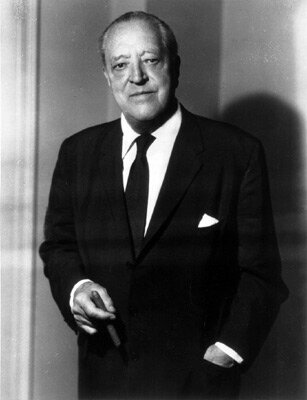
Ludwig Mies van der Rohe
«Less is more» fits perfectly with «form follows function» and means removing everything that is "extra," added, superfluous.
(Practically the German version of Le Corbusier's crusade!).
To conclude, «What is functional is also beautiful» perfectly encapsulates the thinking of this movement.
Mies himself directed the Weissenhof settlement project in Stuttgart, a kind of "International Showcase" designed to present this new type of housing to the public (including the Casa Citrohan we saw earlier).
Here are a couple of examples to help you imagine the atmosphere a bit:
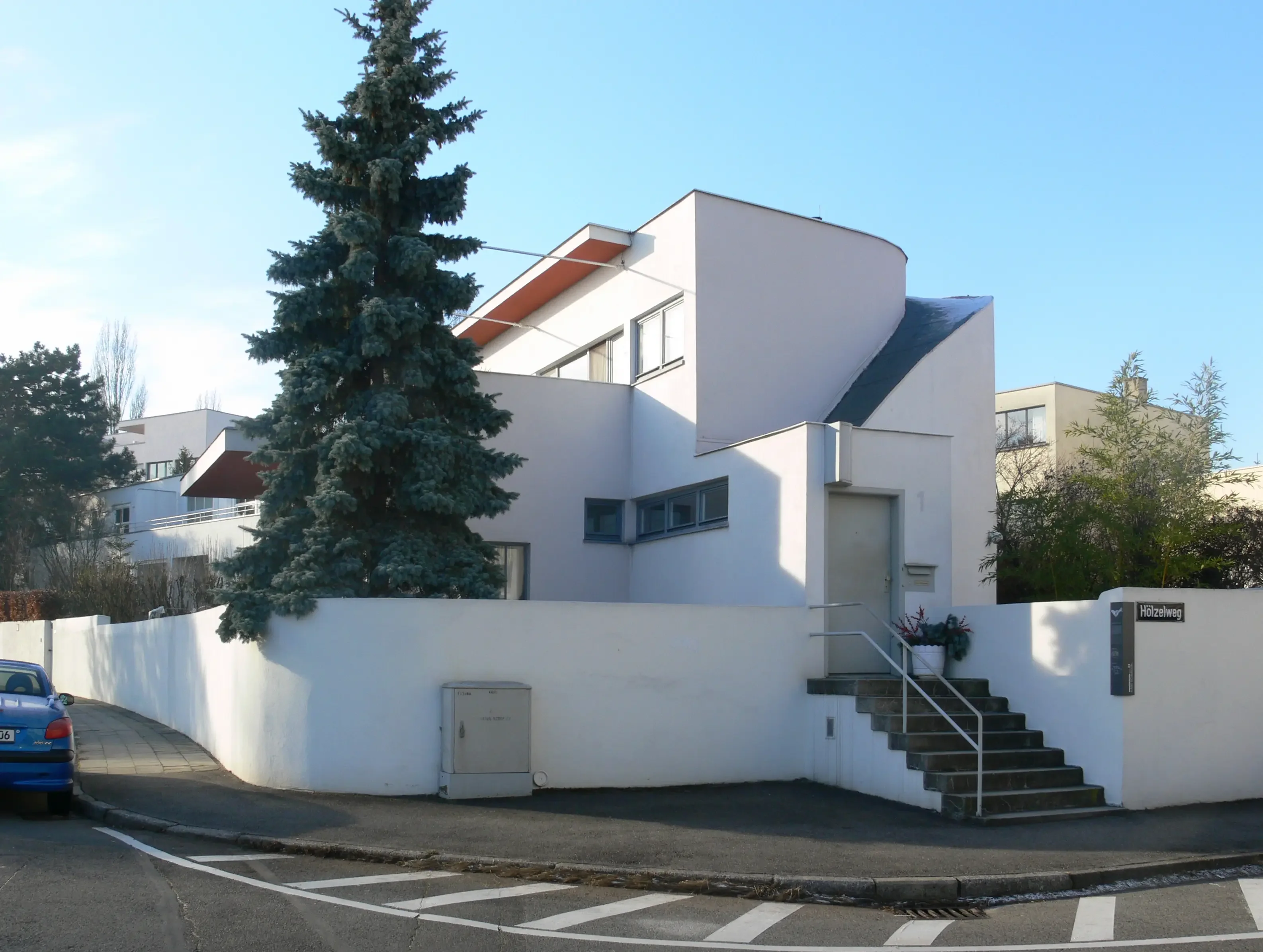
Scharoun House, Hans Scharoun, Weissenhof, Stuttgart, 1927
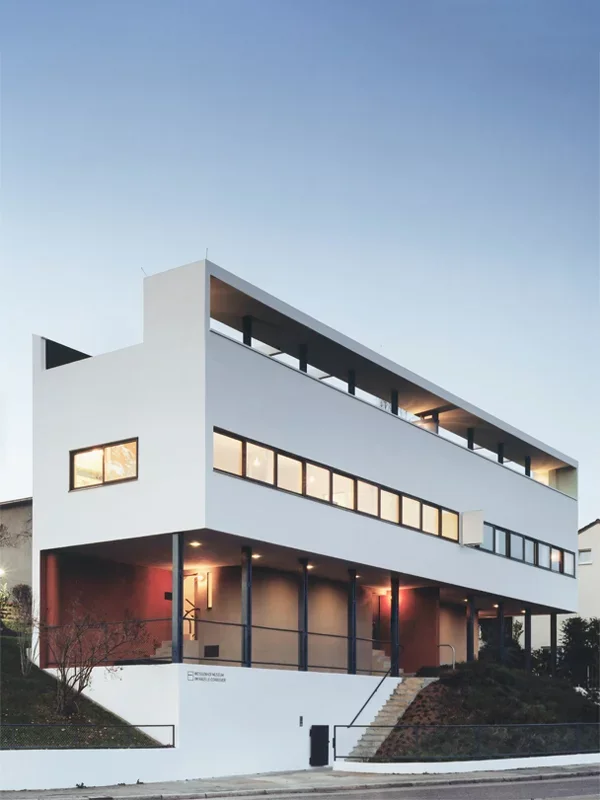
House Citrohan, (another model), Le Corbusier and Pierre Jeanneret, Weissenhof, Stuttgart, 1927
(Spoiler) The Bauhaus would end a few years later at the hands of the Nazis, who would force Mies van der Rohe to close the school forever and emigrate to the USA.
The journey into the 1920s is over; it's time to fast forward through history to see what happens next.
As always in life, every action has an equal and opposite reaction.
Brace yourself because we will jump to a completely different time!
(But much more similar to our present day).
Meanwhile, here between the various interruptions, it has gotten dark, it's really cool outside, I admit!
(Did you count the knights? If you were attentive, one is missing! But we will get back to him, I promise!)
2-Form:
The consumer society, information society, and Post-Modernism
"I don't do function."
Here we are on the opposite side of the pendulum! (A dizzying carousel ride).
Where are we? Or rather, "when" are we? We are in the early 1980s.
A few things have happened in between (including another world war!), so as before, let's look around to orient ourselves.
- Our "Knights" have left us.
- Europe has been rebuilt.
- The "baby boom" has recently ended (again an extraordinary population increase).
- The economic boom and "mass" consumption have exploded.
These factors together have, since the post-war period, driven a rapid spread of "functionalism," which was used by the construction industry to accelerate reconstruction and cope with the baby boom!
Obviously, our "Knights" were people of the highest caliber, while the same cannot be said of the "average builder."
We therefore observe the trivialization of forms, the lack of proportion and poetry in the name of functionality and speed.
(Remember the suburbs? We understand each other).
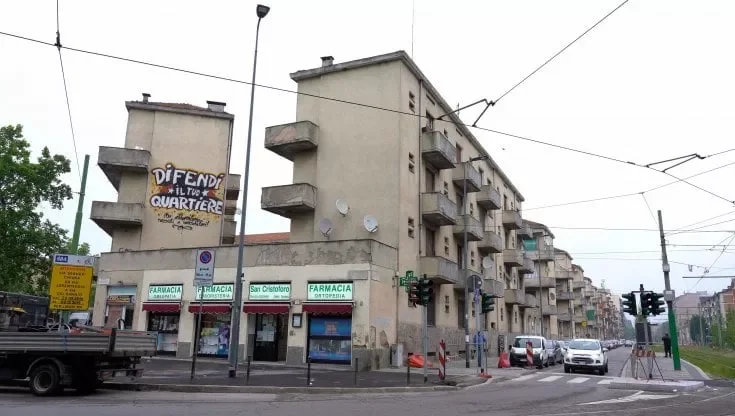
An example in Milan
But I’m not done yet! Look closer:
- It's the era of mass media (TV, radio…).
- Hollywood becomes a planetary success (Stallone and Schwarzenegger).
- PCs! (Apple has just "left the garage”).
- Competition is fierce; companies must be recognizable.
Well, now that we've framed the situation,
look with me at the shape this world takes.
In reaction to the crisis of modernist values and to social and economic pressures, postmodernism arrives (literally: after the modern).
While in modernism «form follows function», in postmodernism we could say that «function follows form».
I've attached a couple of examples from the 80s and 90s to give you an idea.
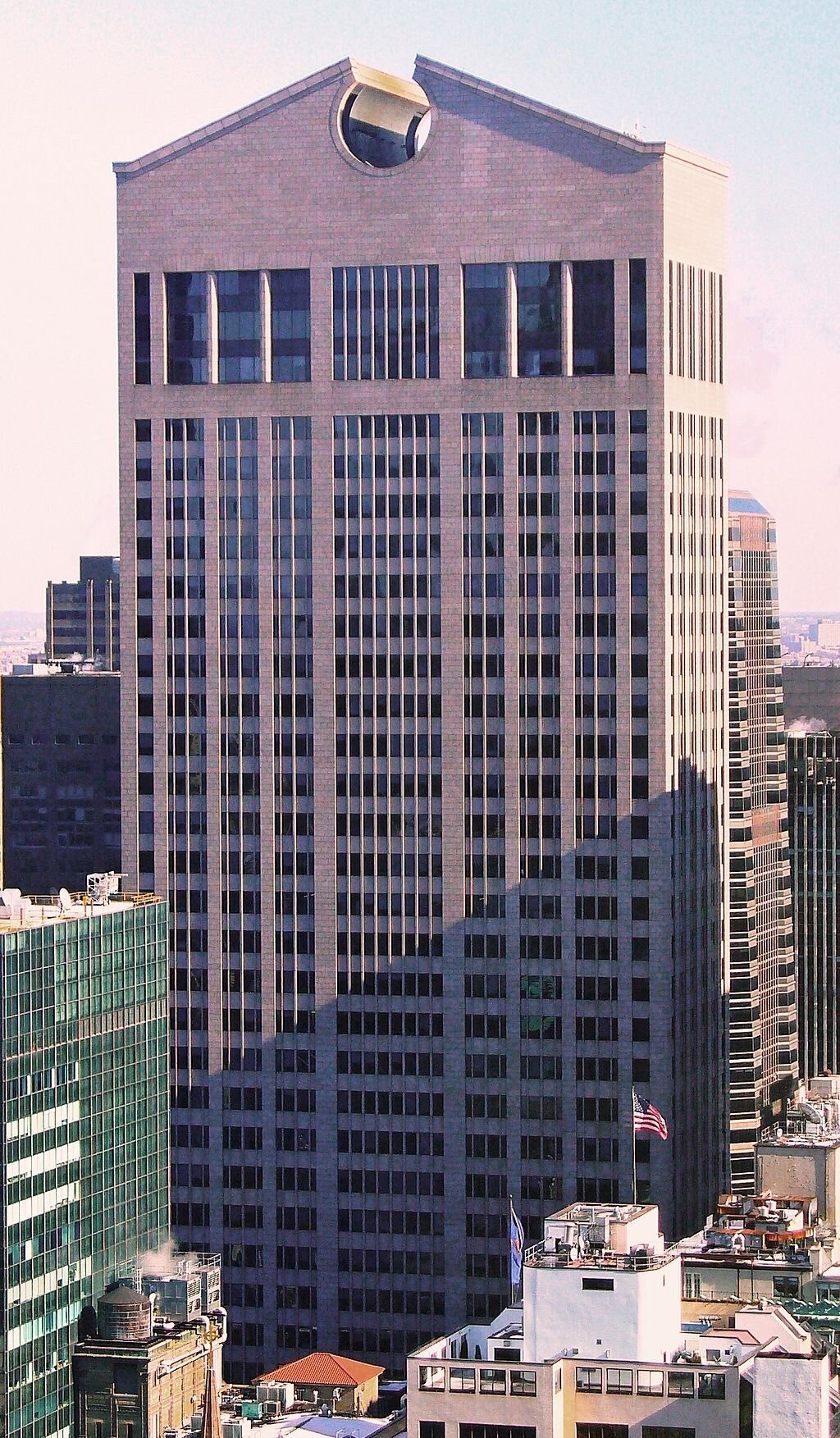
AT&T Building, Philip Johnson and John Burgee, 1984
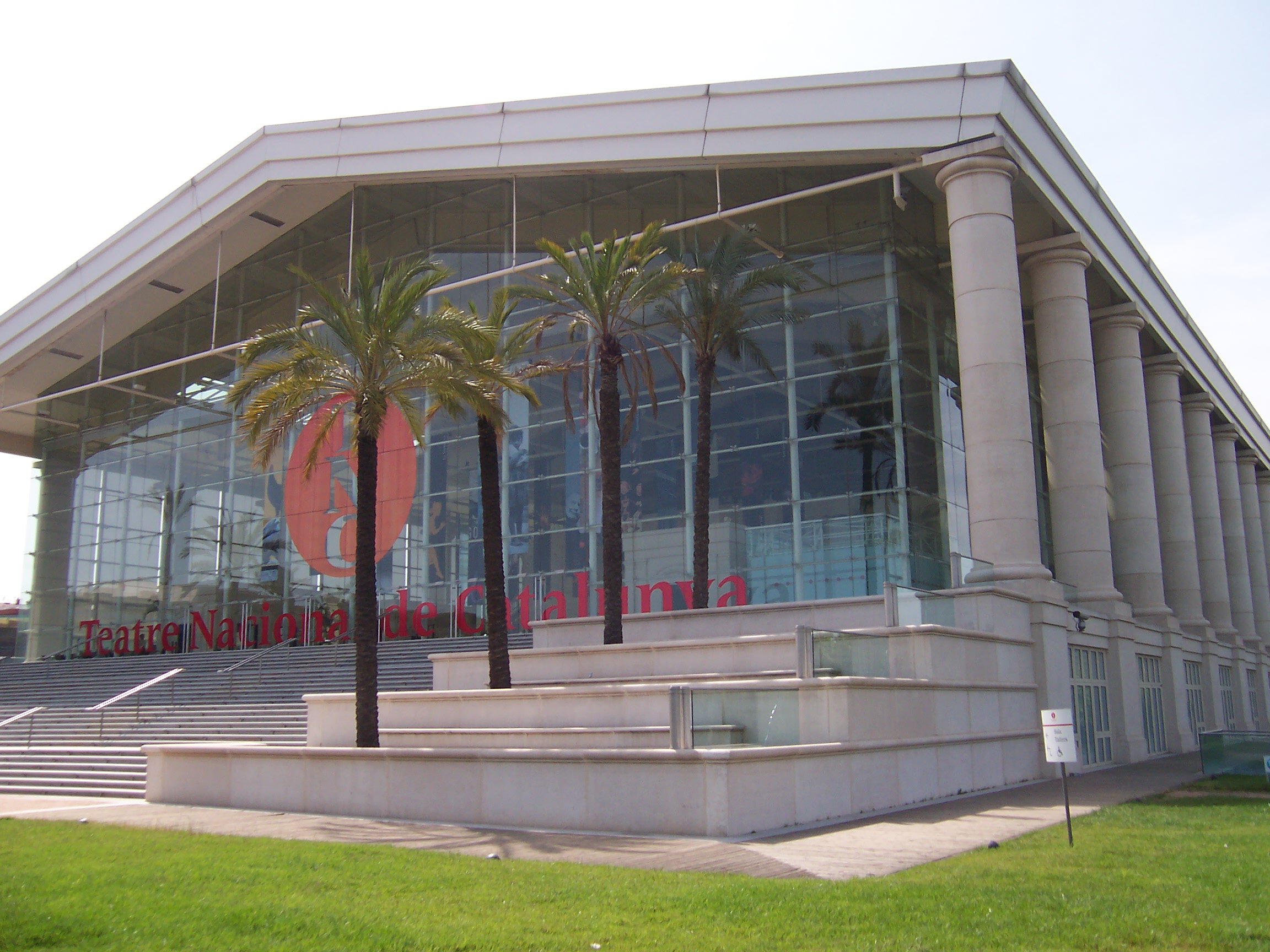
Teatre Nacional de Catalunya, Ricardo Bofill, 1991
But how?! Looking at the National Theater of Catalonia by the Spanish architect Ricardo Bofill (1939-2022)… the "architectural orders" return!
(For Le Corbusier, Mies, and company, this vision was so inconceivable that they probably turned over in their graves when they saw Bofill's theater).
Postmodernism:
- on one hand criticizes the modern utopia, the "dehumanization" in the name of productivity, and the break with history,
- on the other hand seeks answers to the issues of consumer society.
Long story short, the problem is no longer building structures, but building communication tools (the architect/artist crumples paper? here we are!).
Buildings become a form of "branding," they must be able to communicate with the masses, display company symbols (logos).
Architects look back to find meaning, a common language to dialogue with the public again.
Postmodernism is ironic and inclusive with styles, influences, cultures, tradition.
But be careful, it's not a nostalgic return to the past, it's a "Back to the Future"!
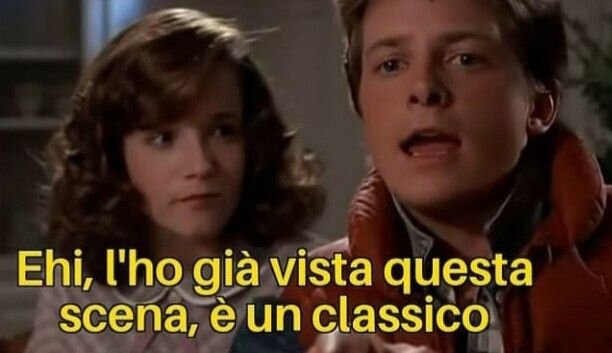
Postmodernism, however, is so inclusive that everything becomes "valuable" (especially if it sells).
While our "Knights" sought a common, universal, and rational language (naively, as we know today); here the situation becomes a battlefield where "anything goes" (as long as it's an icon).
(Meanwhile, «No Light, No Light» by Florence + The Machine keeps me awake).
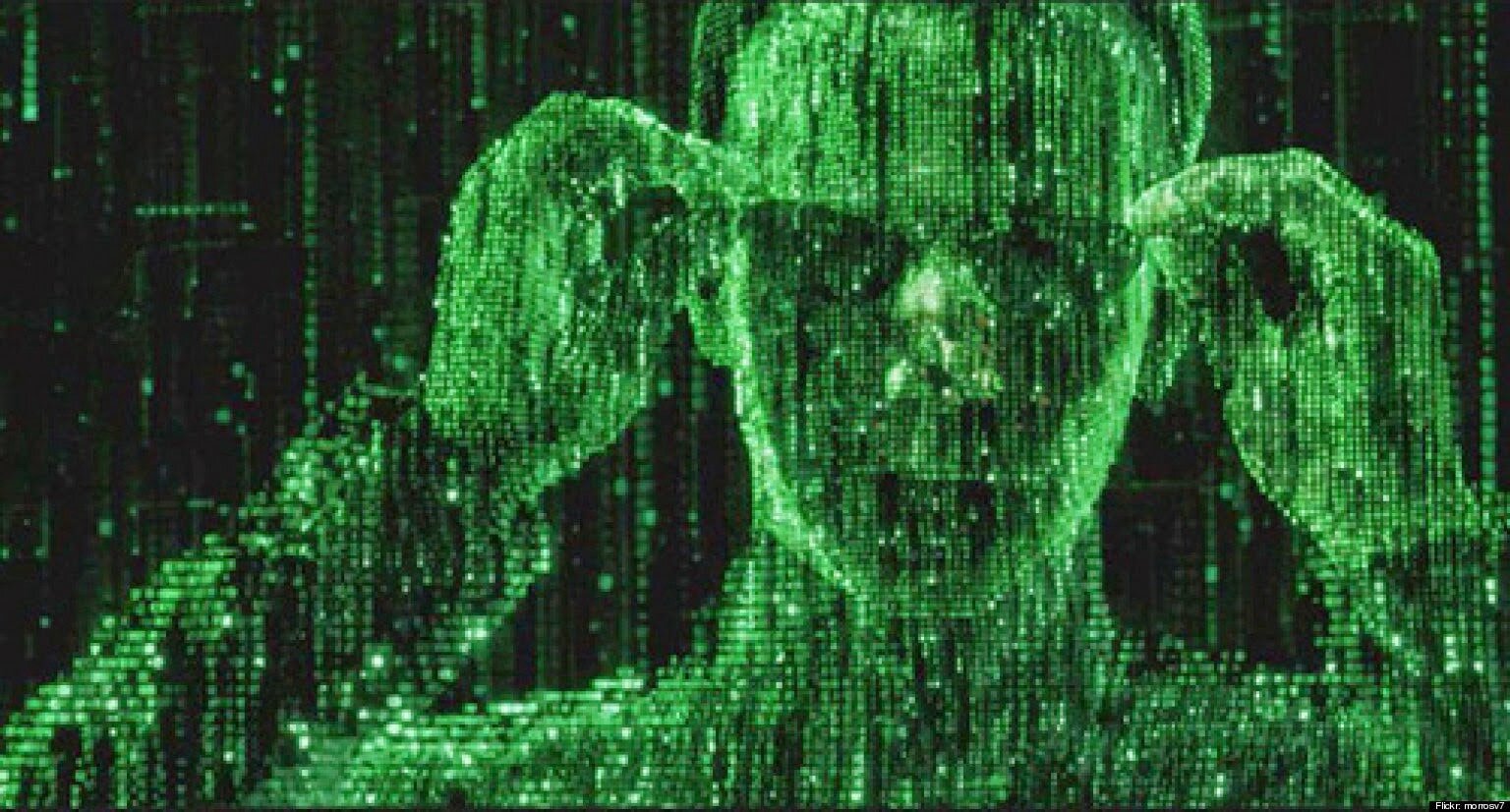
Welcome to the Matrix
Let's return to 2025 (Red pill?), the carousel ride is over (I hope you didn't get seasick).
I believe this adventure has made both you and me more aware, and we've understood two important things:
- thanks to modernism, today we speak of "function" with the meaning of "use" (and that it wasn't like that before! Here's where our "glasses" come from).
- Thanks to post-modernism, we've learned that form is a powerful means of communication (so when I leave the house "neglected," I'm communicating something).
But the pendulum continues to swing before you and me…
- How? You ask me:
- So, who is right?
- And who invented the pendulum?
- And the last "Knight"?
- And what do flowers and iPhones have to do with it?
- And what do you think of this whole story?
You're right, there are still many questions to answer!
But this has become very long, and I want to give you time to metabolize what I've told you, because I want you sharp to follow my reasoning!
Next week I will write to you with all the answers as I promised at the beginning, and we will close the circle together!
See you in Part 2!
I wish you a good weekend,
-Nicholas
P.S. In going through this whole story with you and inserting the images, a doubt came to me that I want to express like this:
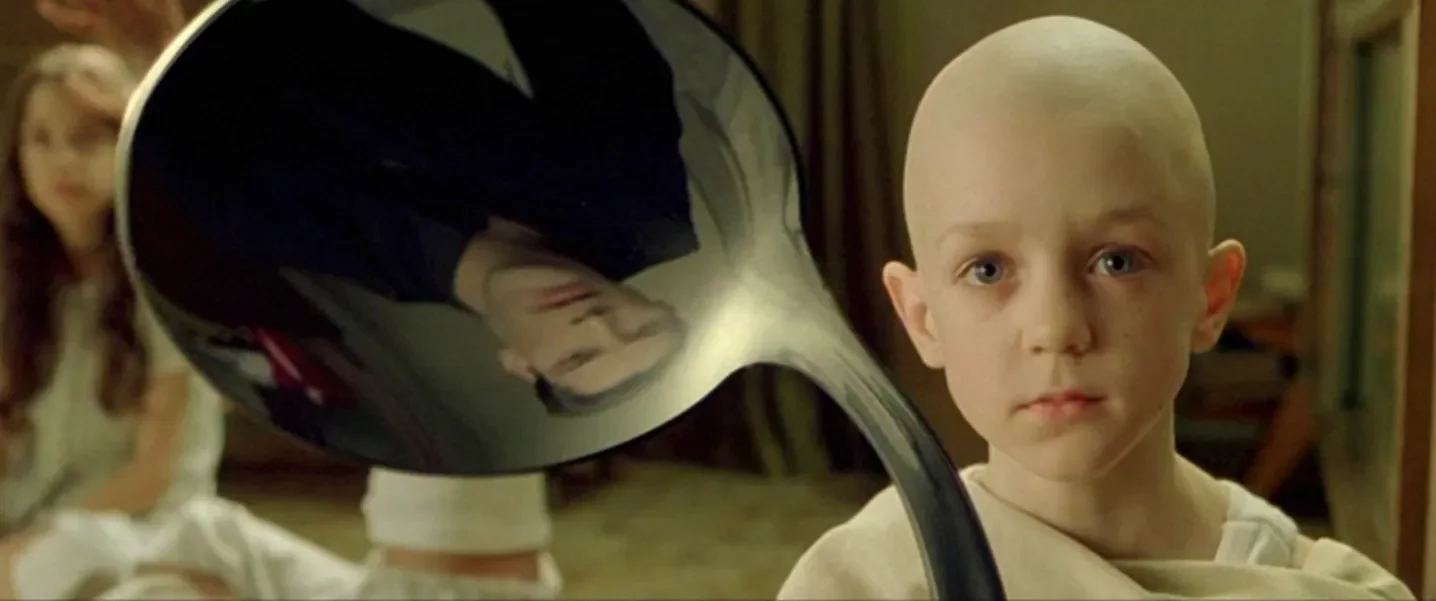
(Boy) "Do not try and bend the spoon, that's impossible. Instead, only try to realize the truth."
(Neo) "What truth?"
(Boy) "There is no spoon."
P.P.S. If you enjoyed this article and found the stories I tell engaging, you can subscribe to the Newsletter by filling out the form on the page you'll find here.
Less than 10 seconds to subscribe and receive these reflections twice a month, on Saturday.